Guide to Raising Pigs in Farming Simulator 25 (without mods)
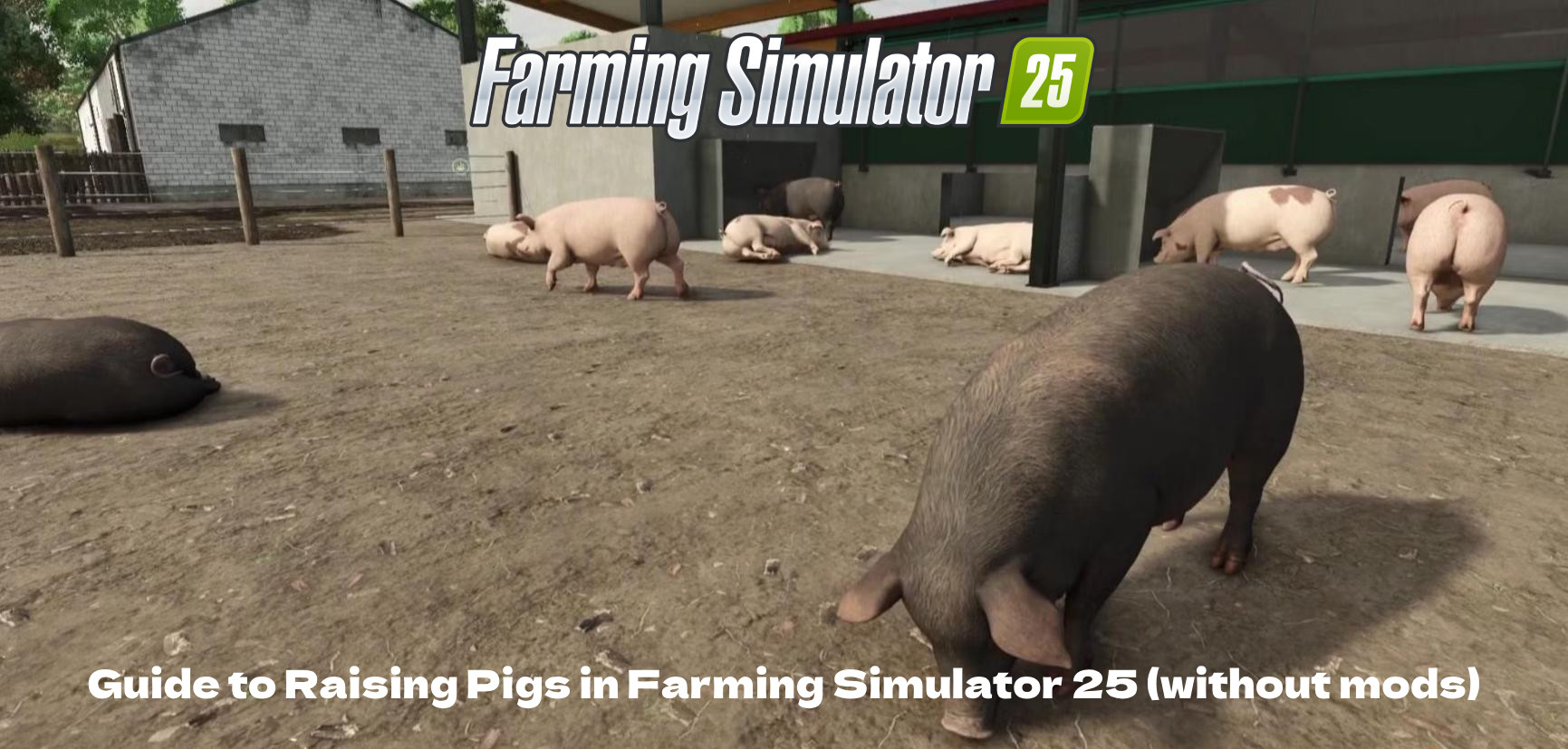
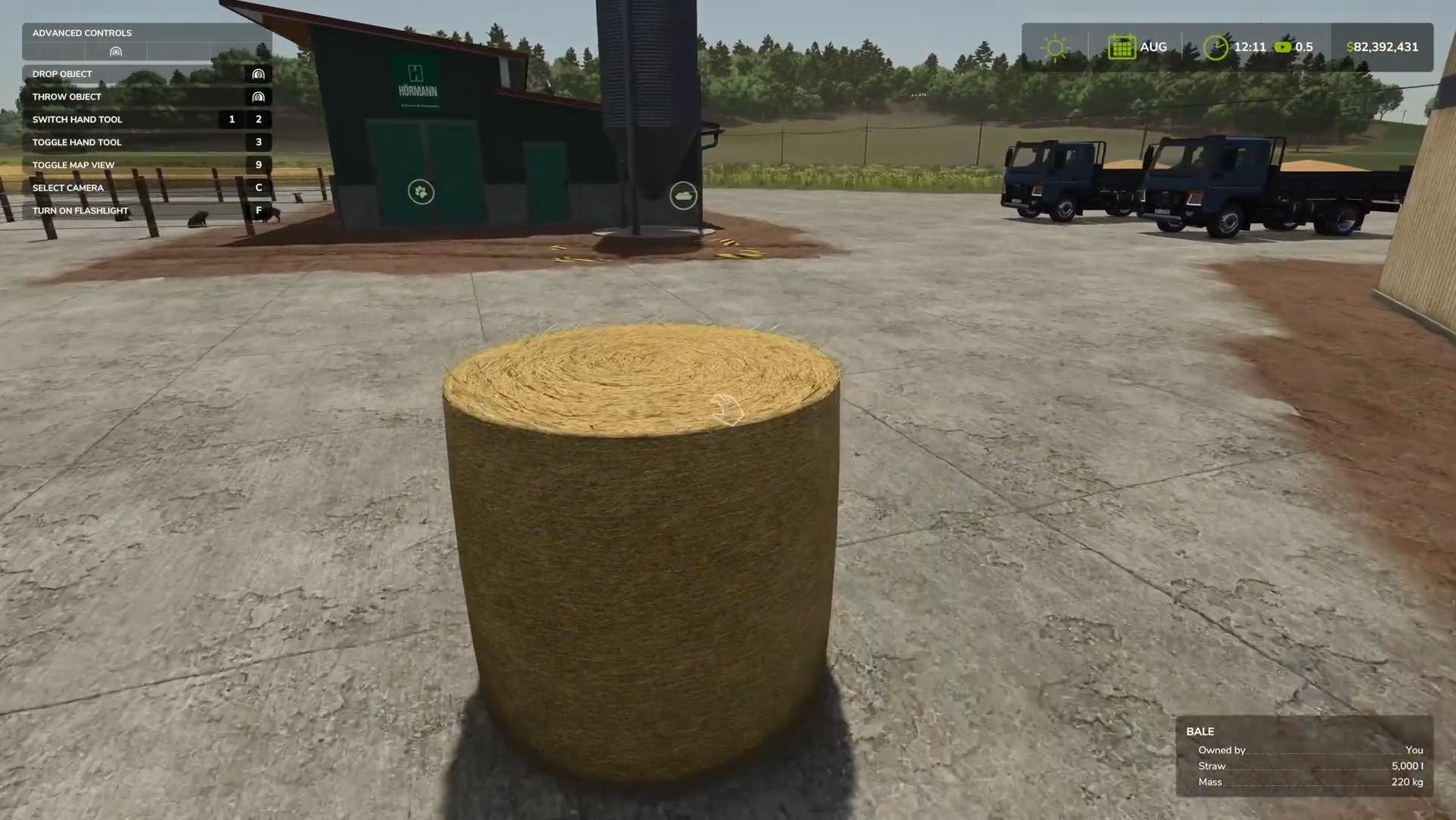
Pigs in FS25 require a little more attention than sheep or chickens, but raising them can be quite profitable. They grow quickly and give offspring. You can also get manure from them, which can be sold or used on your own fields as fertilizer.
In this guide you will find everything you need to know to turn a pig farm into a stable source of income.
Setting up the pig pen
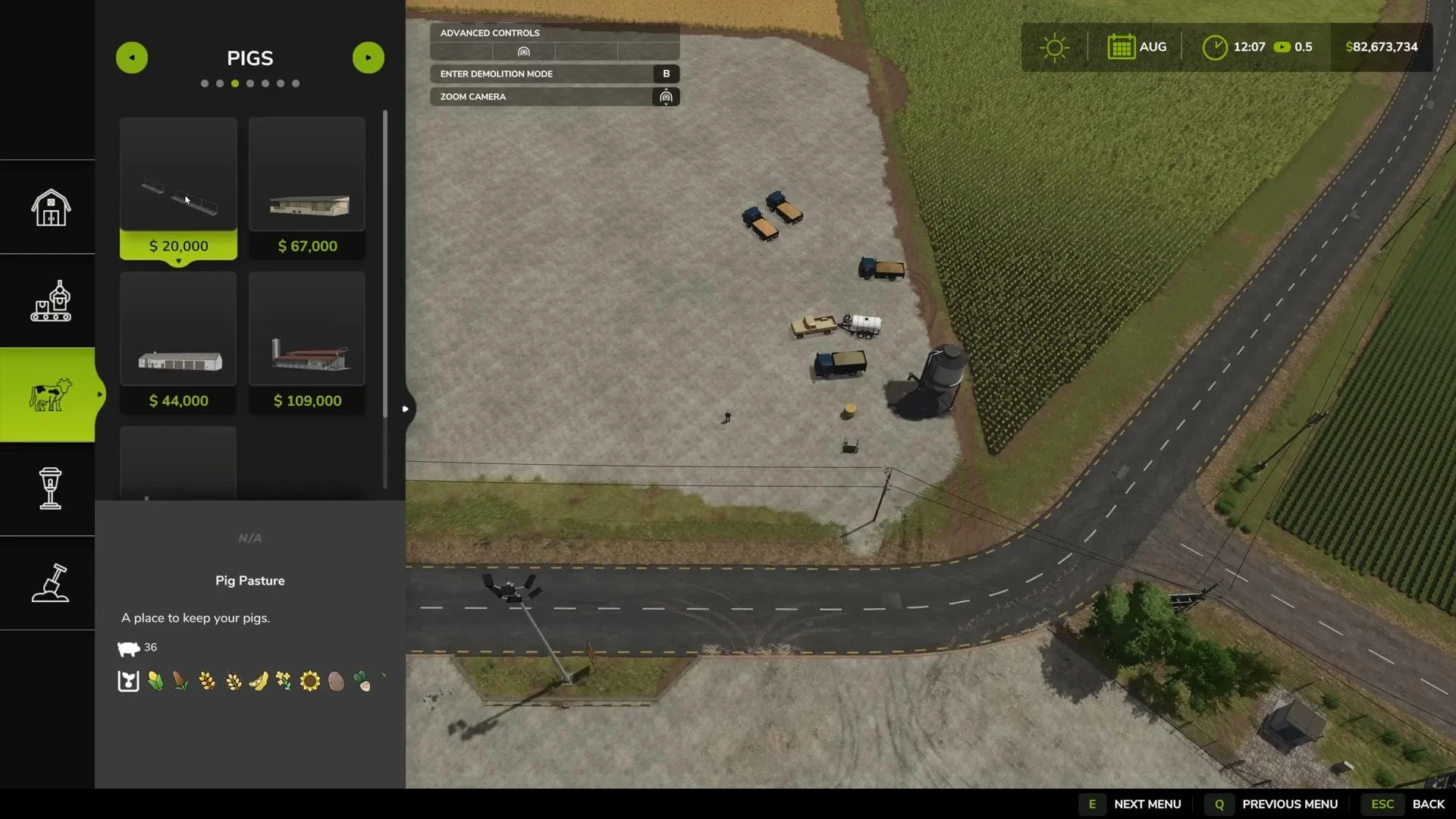
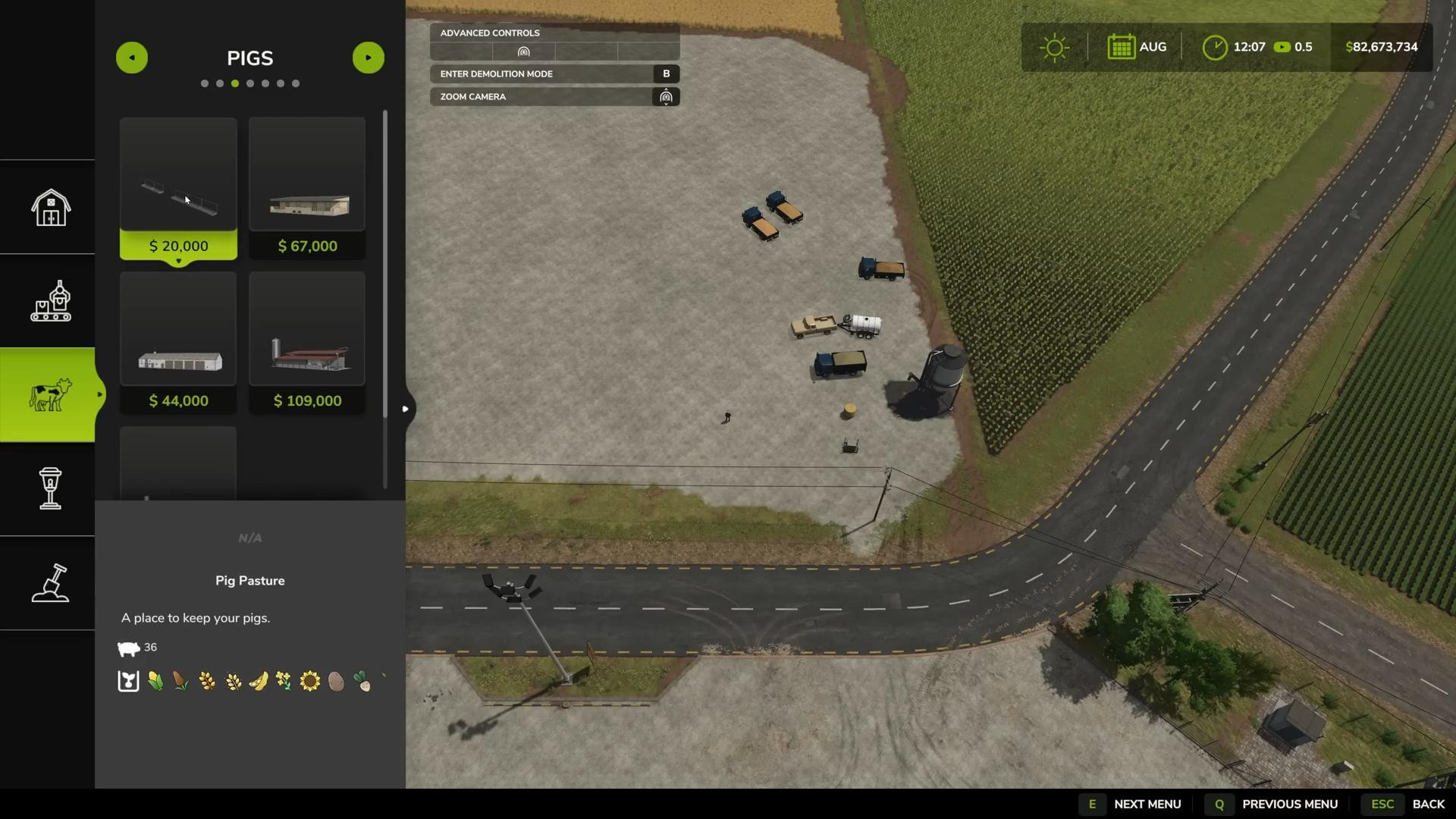
First you need to build a pen for the pigs. To do this, go to the construction menu, open the “Animals” section, then “Pigs”.
You will see several options:
- Pasture - the most budget-friendly option. Suitable for starting, but requires manual water supply and does not allow for manure production.
- Pig pens - full-fledged pens. They automatically supply water to the animals and allow you to collect manure and slurry if you add straw.
Find a suitable location and install the pen.
The pen can be enlarged by choosing an additional fence when installing it. After all, the larger the pen, the more pigs can fit in it. For example, a standard 36-head pen can be expanded to 74 or more.
How to buy pigs
Once a pen has been built, interactive zones with corresponding icons will appear next to it. If you don't see them, turn on the icons in the game settings under “Show Interactive Zones”.
You can buy pigs in two ways:
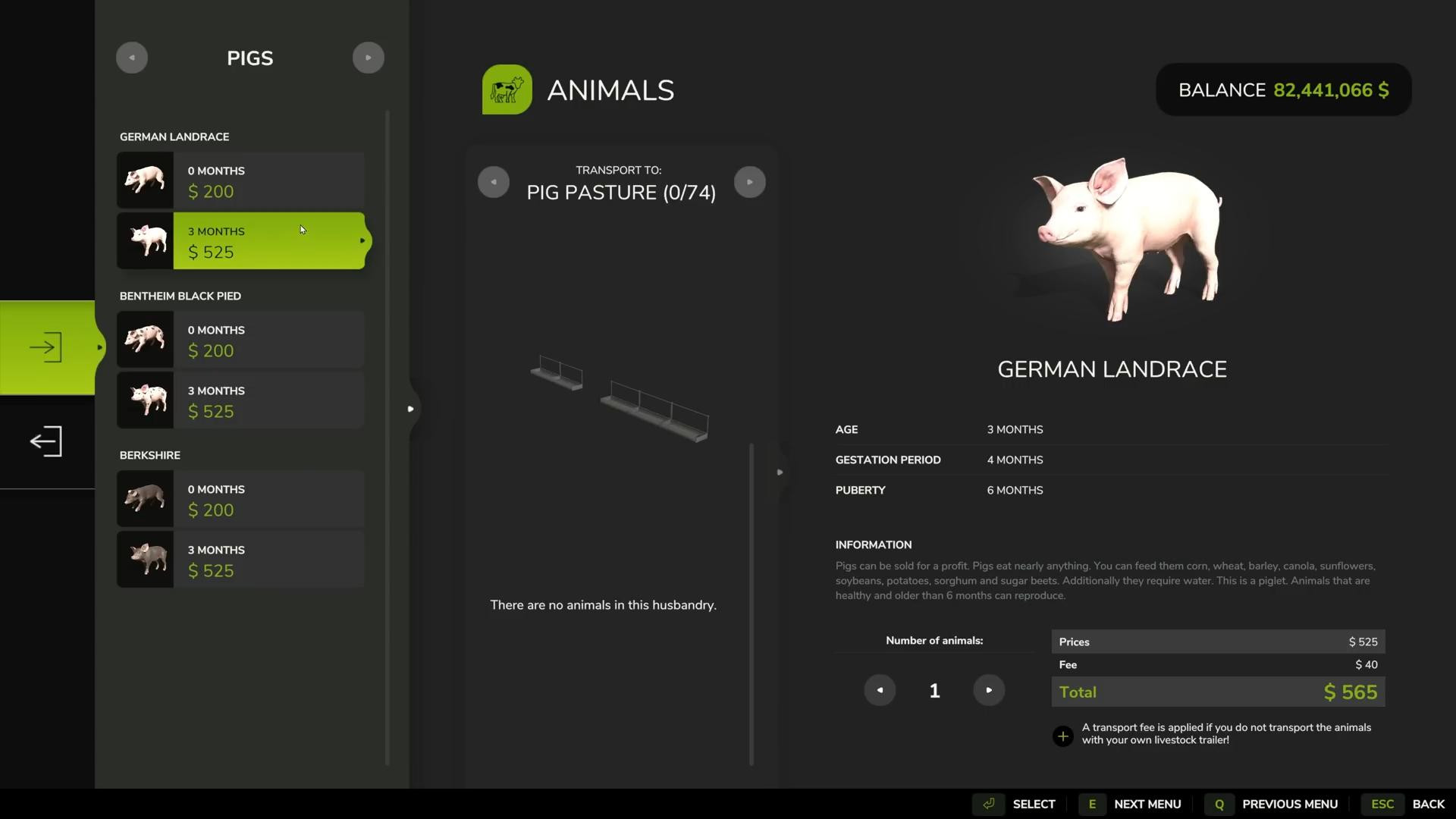
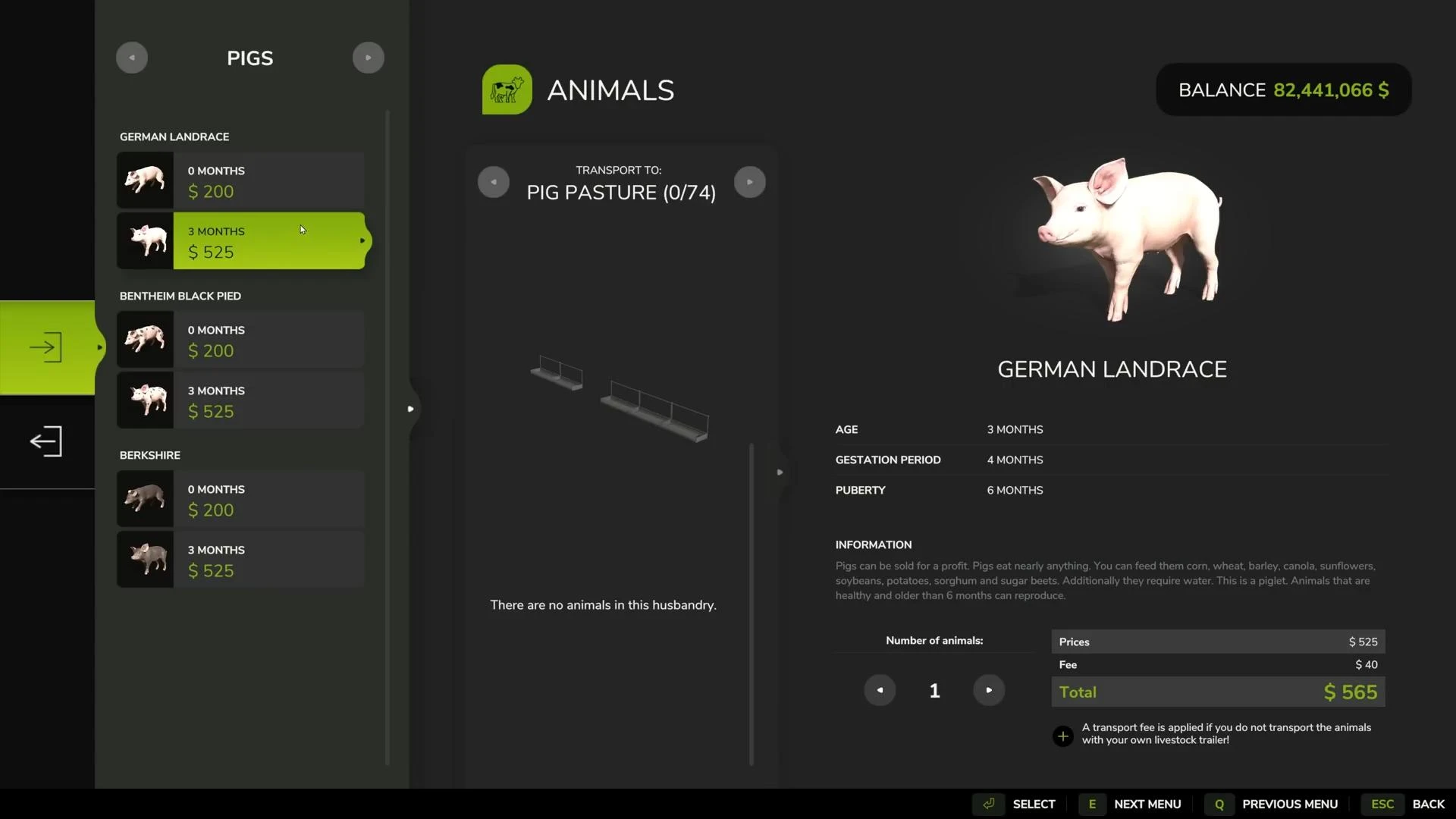
1. Directly in the pen - just go to the paw icon, press R (on the PC), select breed and age (0 or 3 months) and pay for the purchase. There is an additional shipping charge per head.
2. With a livestock trailer - buy or rent a trailer (13 or 36 head), go to the “Livestock Breeder” icon on the map, buy pigs there at no extra charge and take them to your pen.
When buying pigs, you should know that the age of the pigs affects their growth rate. Pigs that are 3 months old cost more, but they will reach maturity faster and start breeding.
Water, straw and manure
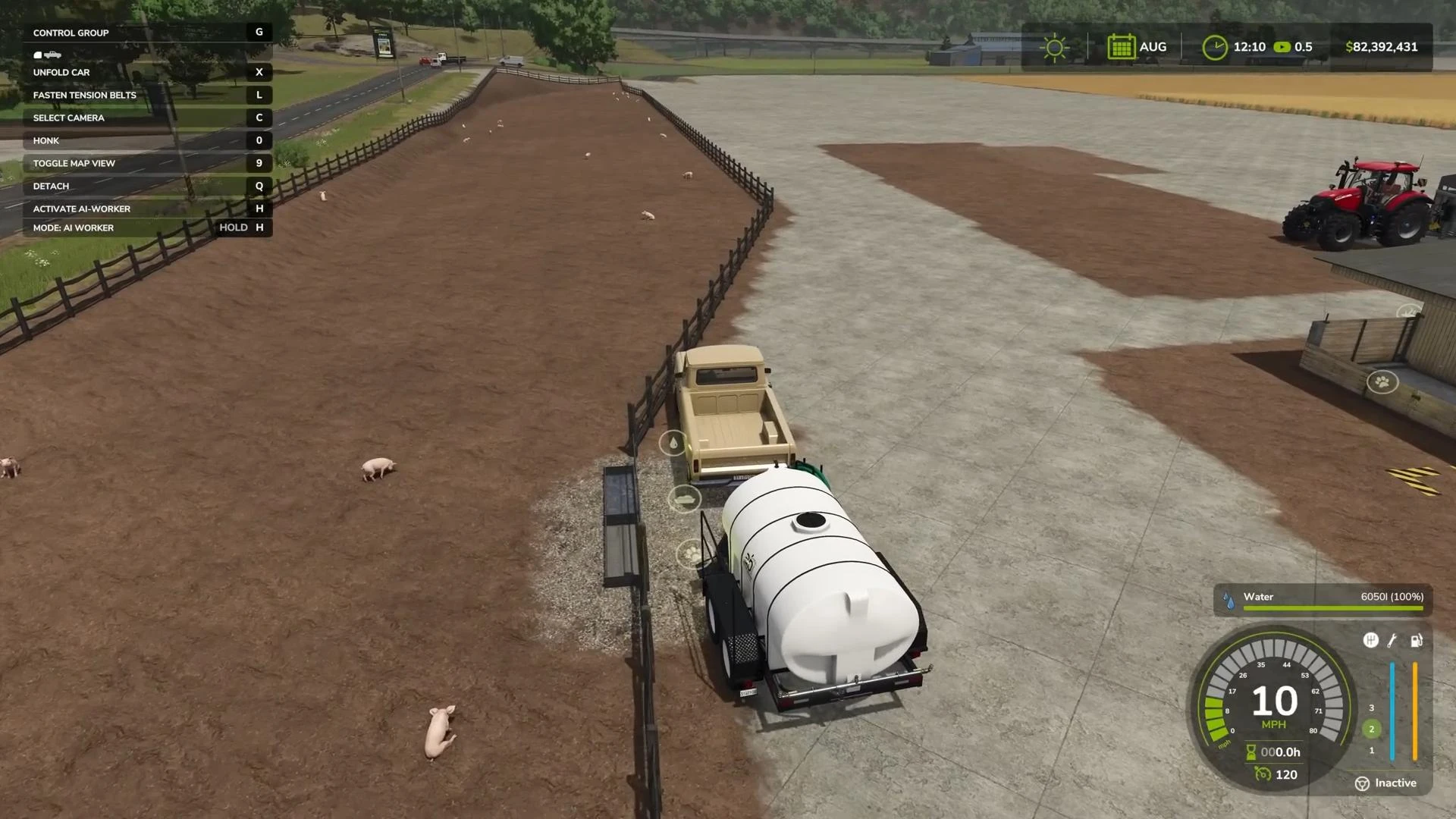
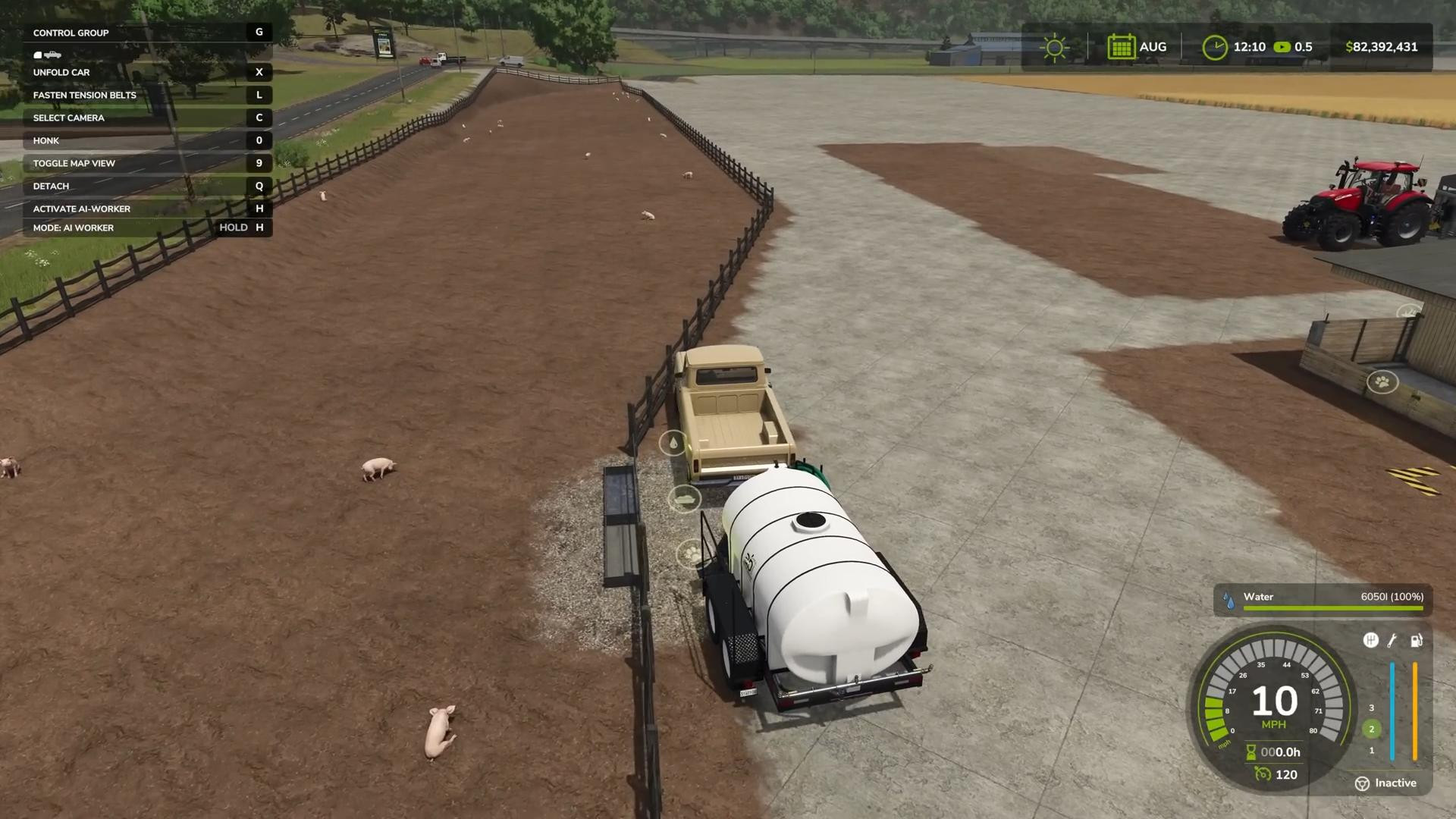
The pig pasture must always be supplied with water. Drive the water trailer to the water drop icon, press the appropriate key (usually I) and fill the water. For all other pens, water is supplied automatically. A small fee will be charged for this.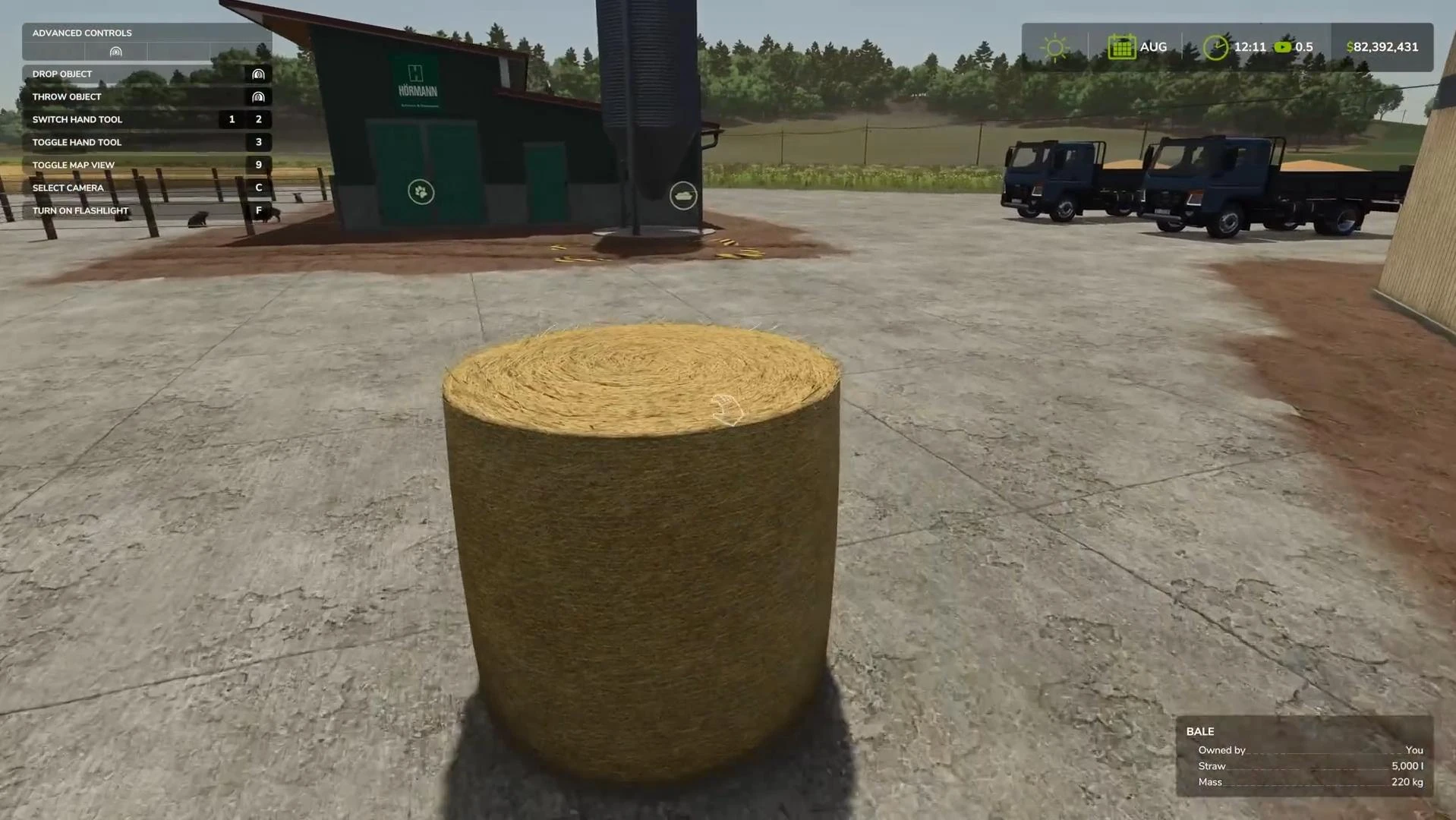
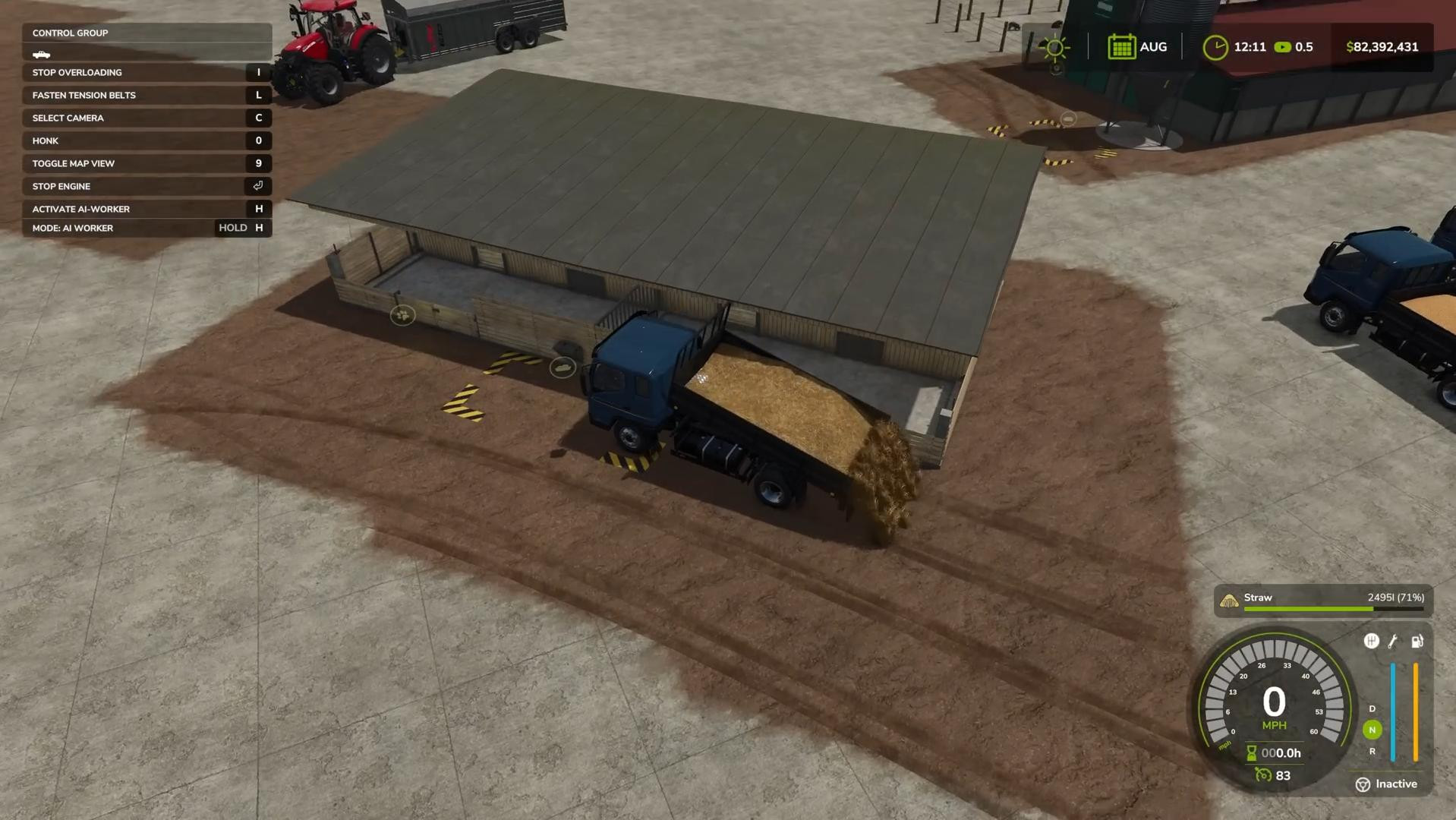
The use of straw is also recommended. It is added to the pen to produce manure. Without straw, only slurry will be produced. Although it has no effect on the health or productivity of the pigs, using straw will produce manure that can be sold or used to fertilize the fields.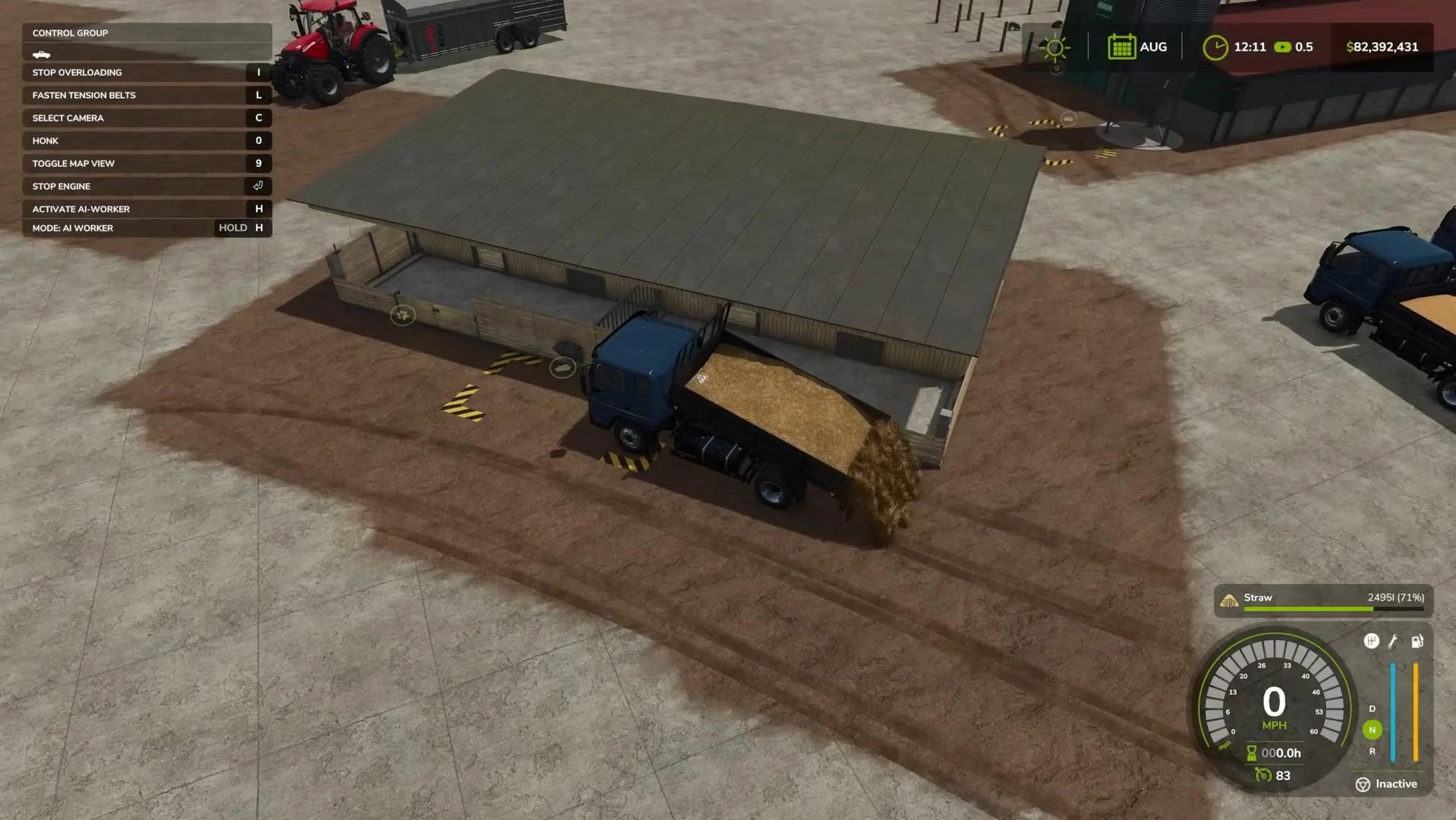
Straw can be added in loose or bale form. Some paddocks will accept bales, others will only accept bulk straw. Make sure you get exactly in the straw area and feed the material with a trailer or straw cutter.
Hogs produce two types of waste:
-
Slurry (slurry) - liquid fertilizer. It is always produced if the pigs are given water and food.
-
Manure is a solid fertilizer. It is only produced if there is straw in the pen.
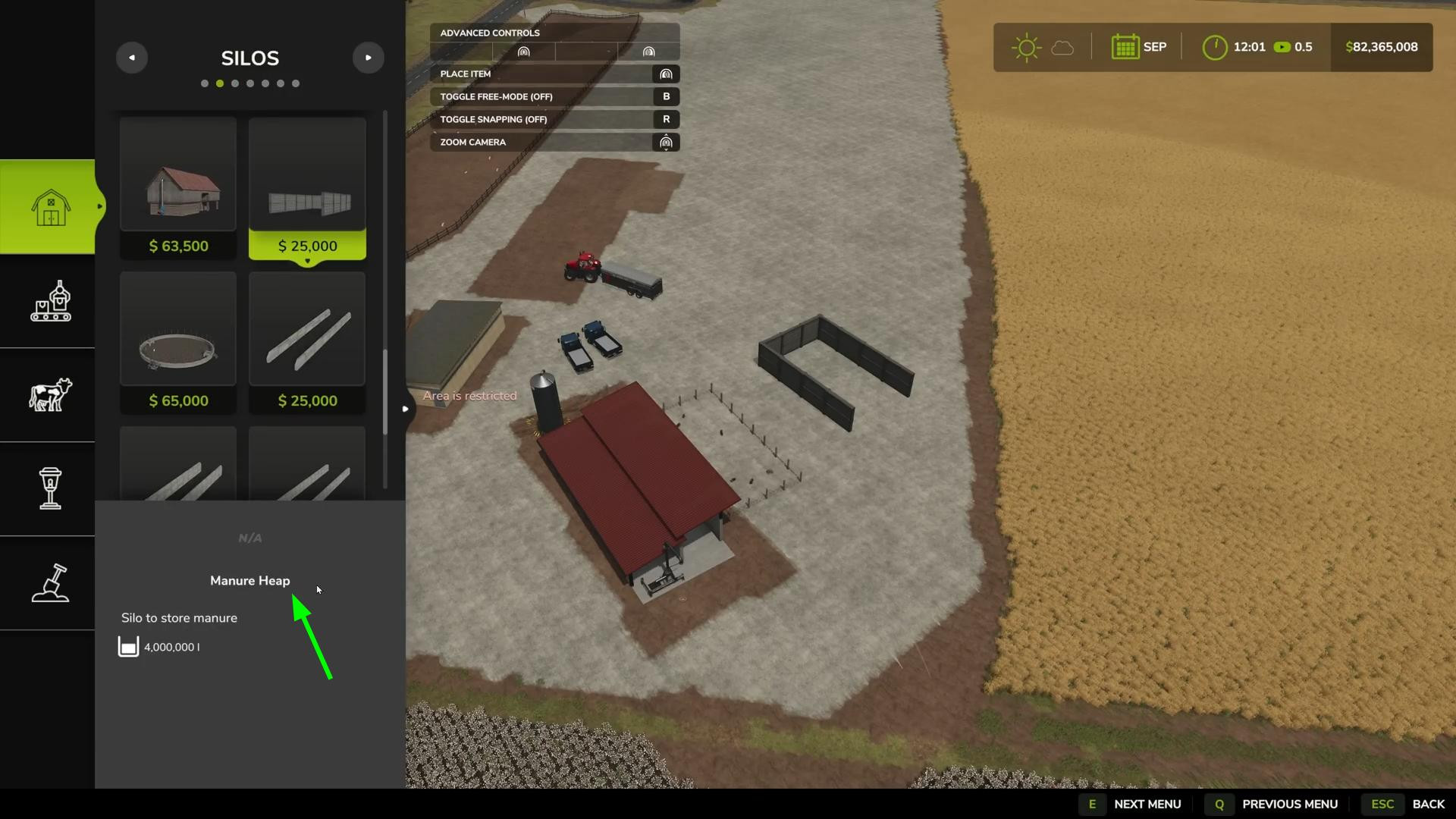
To collect manure, you must not only provide the pigs with straw, but also build a Manure Heap (Silo Extension → Manure Heap). Place it next to the pen so that the game “understands” where to put the manure.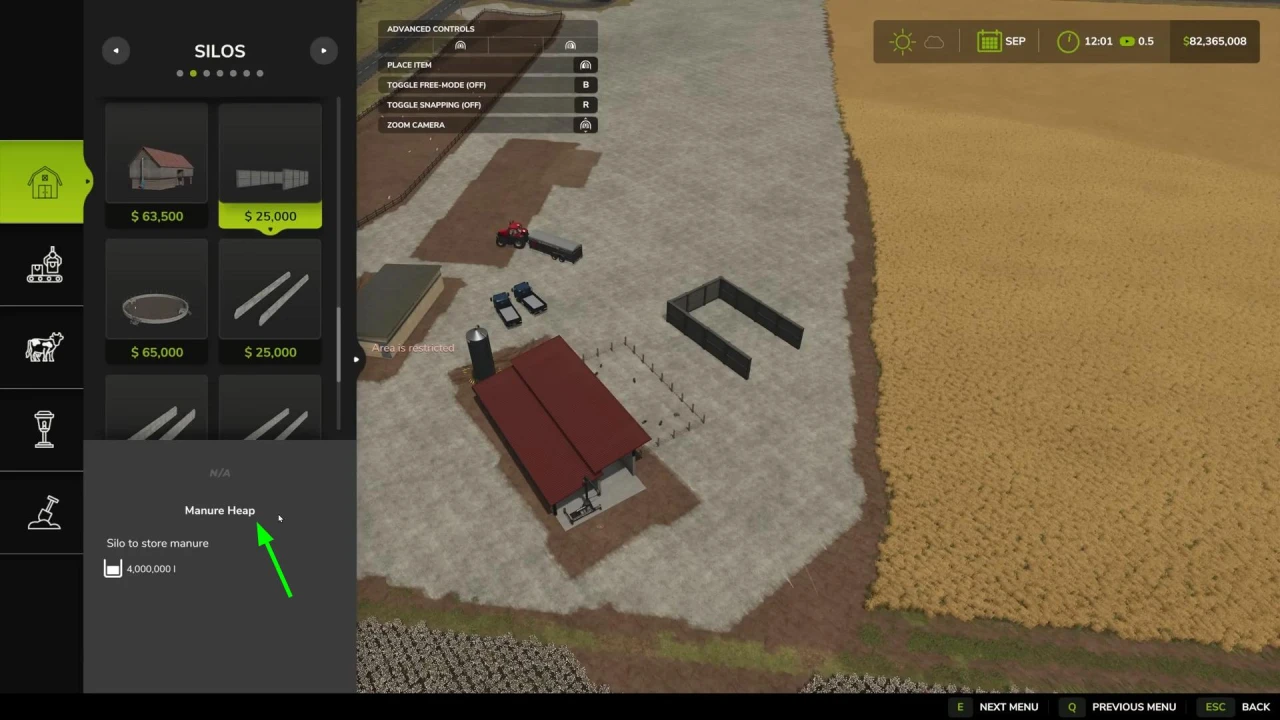
You can collect manure from the standard tank on the paddock (pipe icon). A tank trailer is needed for this.
Both types of fertilizer can be:
- apply to fields as organic fertilizer;
- sell if there is a marketing outlet;
to a BGA (biogas plant) to produce digestate and generate income.
Feeding pigs: how their nutrition works
Unlike cows or sheep, the nutritional needs of pigs fall into four categories. And yes, they don't have a pasture-based diet - meaning they won't eat anything on their own, even if the pen is on grass.
All food for pigs is hand fed, and it must be intelligently distributed among the four categories:
- Basic food - 50% of the total ration.
- Cereal crops - 25%.
- Protein crops - 20%.
- Root crops - 5%.
Combined, they give 100% of the productivity. The more of these categories you cover, the higher the health and growth rate of the pigs. But even one category is enough to keep them from dying - there will just be stunted growth and zero fertility.
What to use for each category
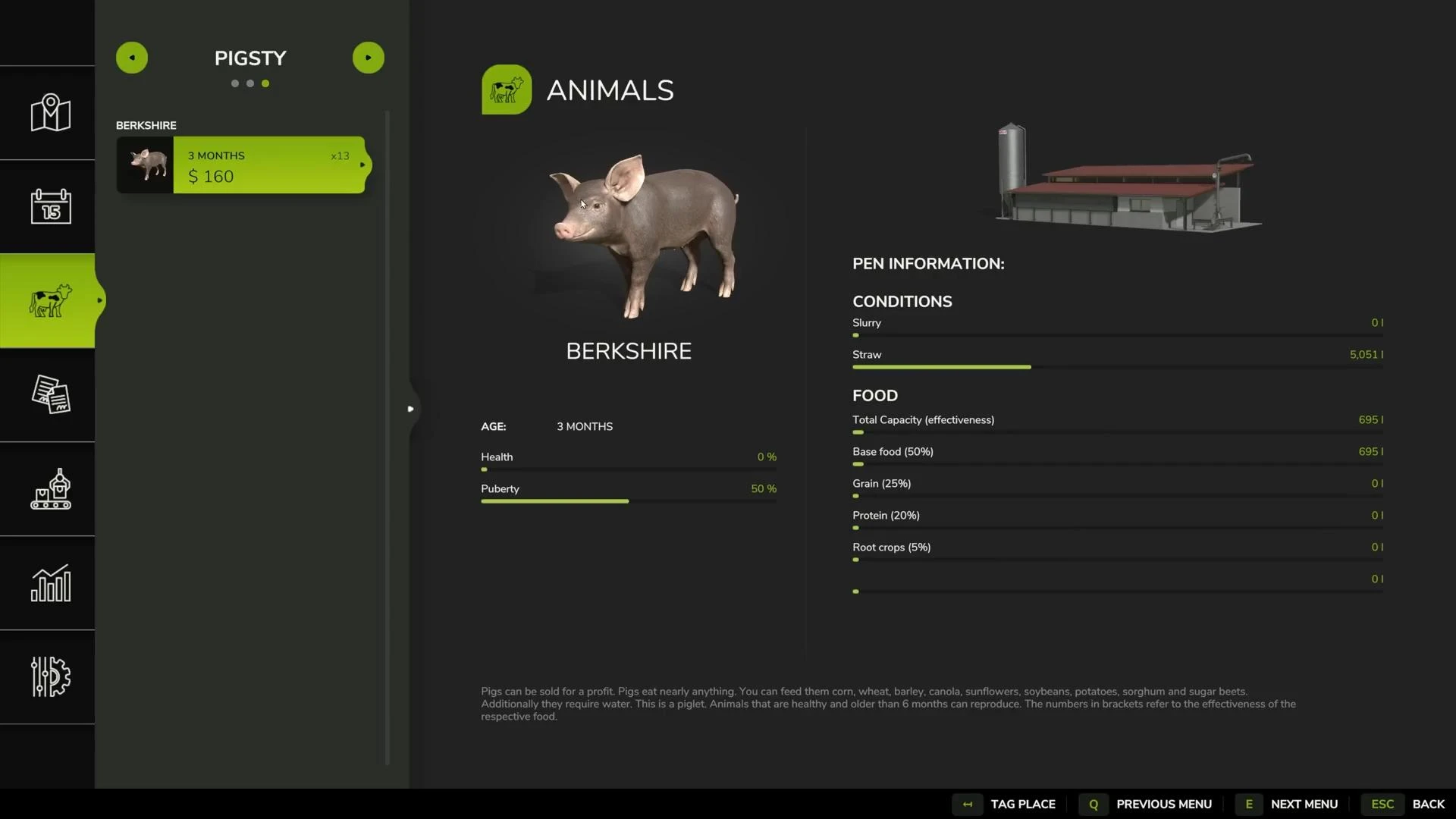
What exactly are the crops that fall into each of the four categories? Let's see:
Basic food (50%)
- Corn
- Sorghum
Grain crops (25%)
- Wheat
- Barley
Protein crops (20%)
- Soybean
- Sunflower
- Canola
- Potatoes
- Beet
- Red beets
- Carrots
- Parsnips (parsnips)
You can feed any of the crops listed - the game will count them in the appropriate category.
How to feed the feed
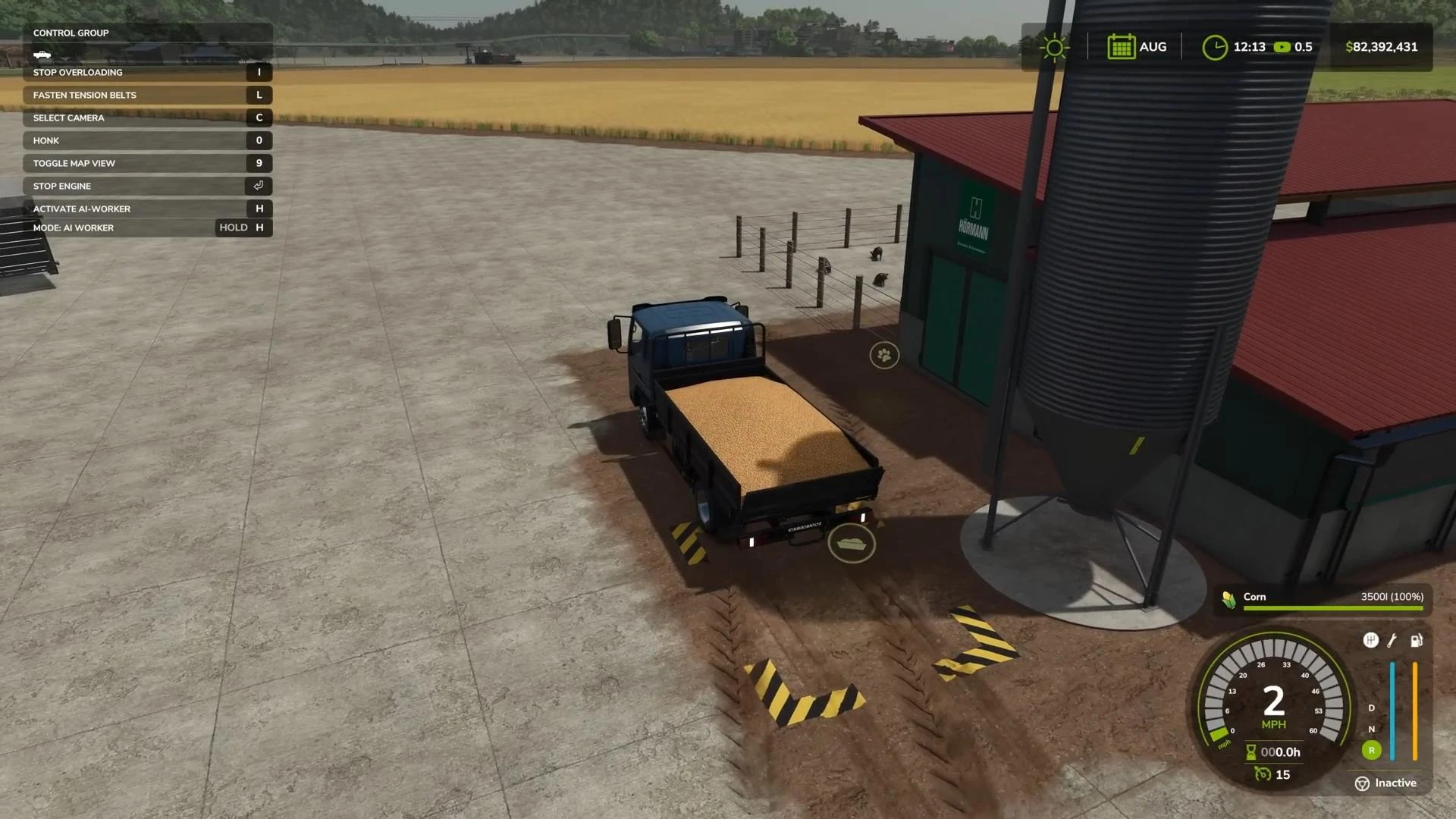
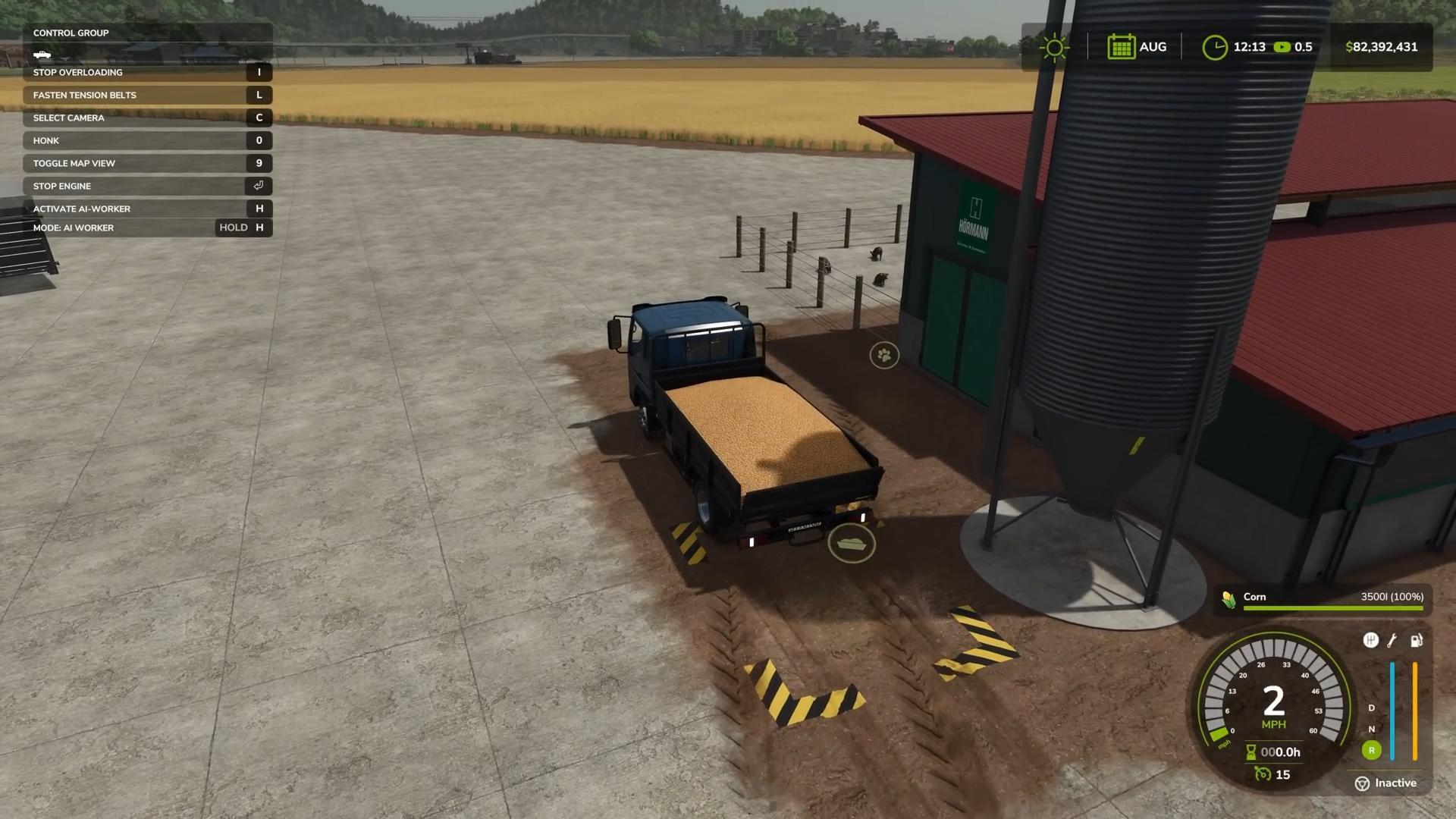
- In bulk with a trailer - simply drive up to the feeding area and unload.
- In bales or big-bags, if it is purchased feed.
- Pig Food - the easiest way, but also the most expensive.
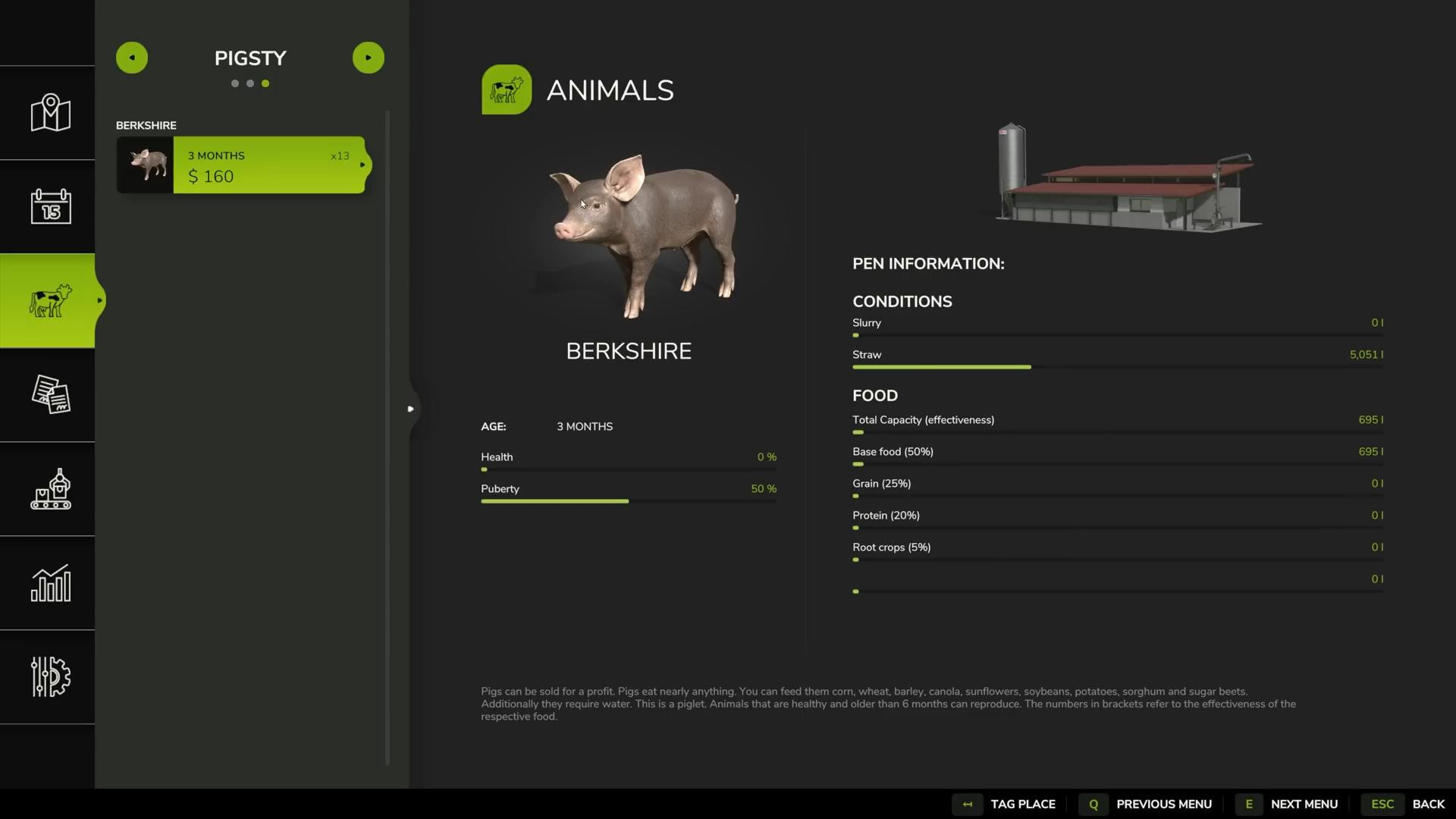
The animal menu shows how much feed is in each category. However, all categories share one common storage area. If you fill it 100% with corn only, you can no longer add soy or potatoes. So always keep an eye on the available volume.
If you don't want to bother with all four categories, you can just buy Pig Food. It's a balanced mixed feed, sold at the store. It's immediately distributed among all four categories and you'll get 100% productivity right away. Moreover, it is easy to transport in any trailer.
However, such feed is quite expensive, about 1000 dollars for 1000 liters. And you will not be able to choose the ingredients for mixing, it is sold ready-made.
Pigs eat more basic food. Root vegetables they don't like very much. For basic rationing, corn or sorghum is great.
With an incomplete diet (only basic and grain foods), animal health will be kept at 75%. Pigs live but do not reproduce.
A complete diet is required for them to produce offspring. It ensures 100% health, rapid maturation and a litter every 5 months. Also, do not fill the feeder with one category - leave room for the rest.
Breeding and productivity of pigs
Once you have provided your pigs with a nutritious diet and comfortable conditions, their growth and, most importantly, reproduction begins.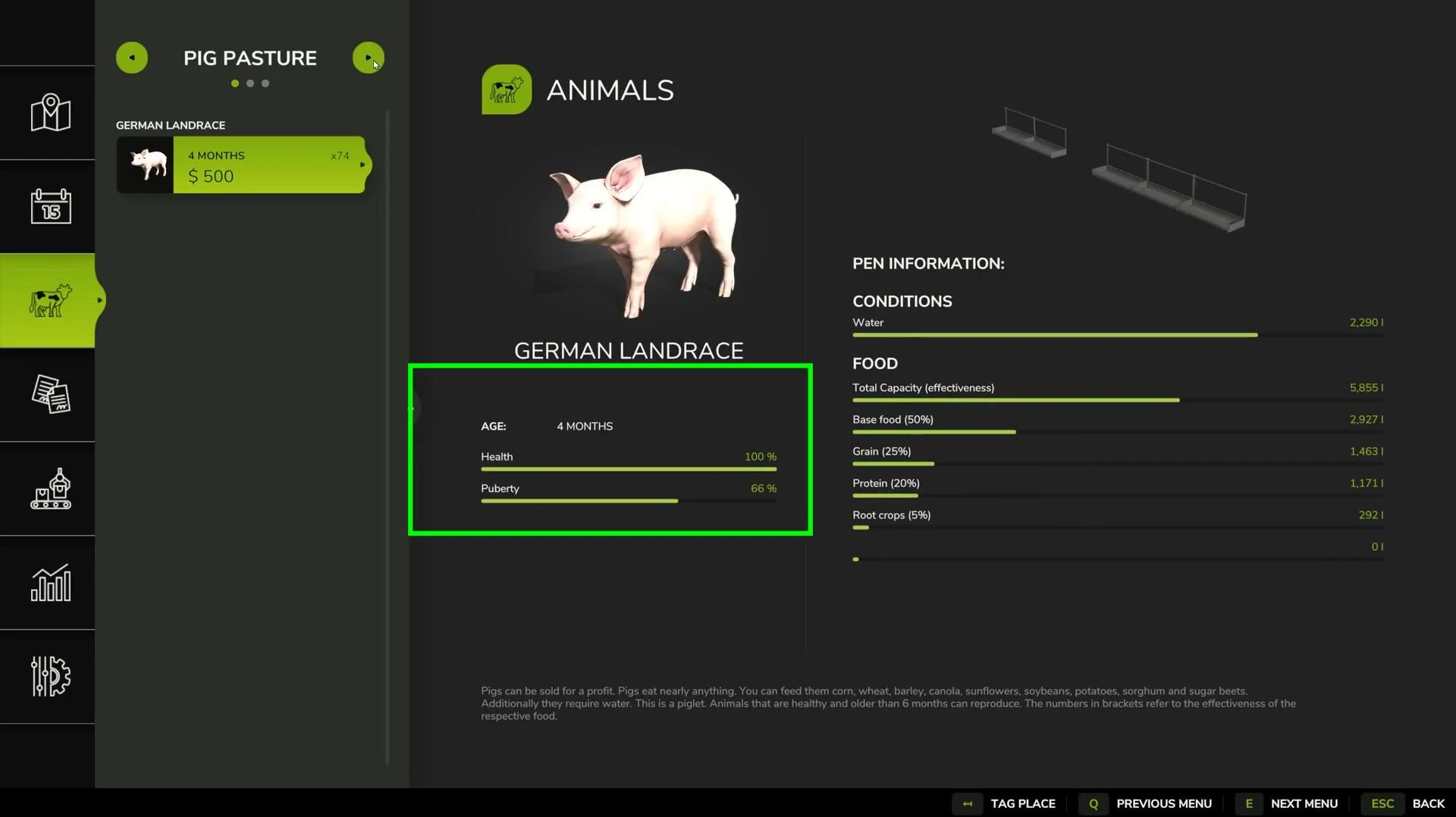
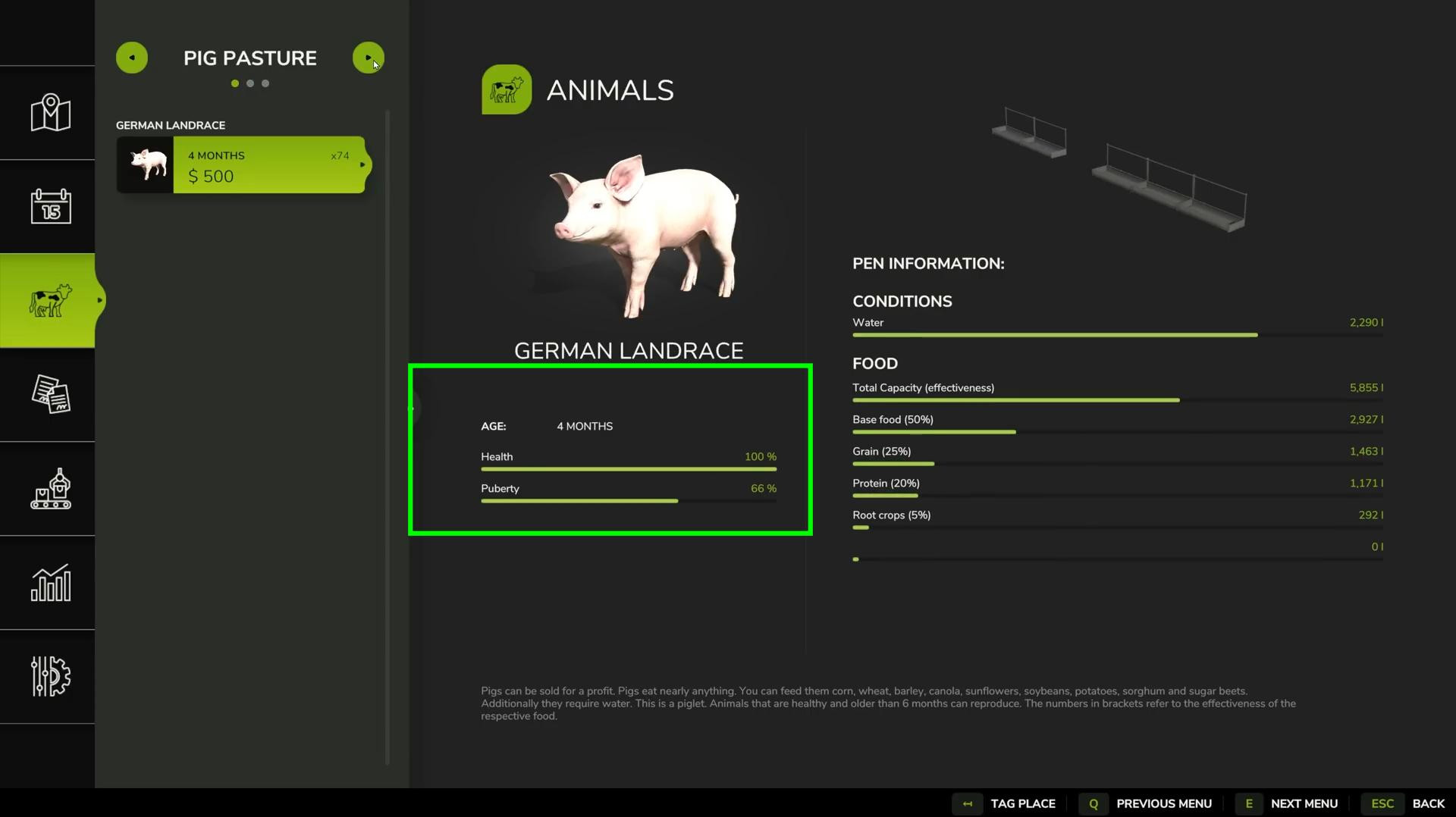
Every pig has two key indicators:
-
Health - directly related to nutrition. Only when the pig is 100% healthy will it begin to reproduce.
-
Puberty - comes with age. After reaching maturity (usually 5 months), the pig can produce offspring.
If all is well, each adult pig will produce one piglet every 5 months. So, in a pen of 74 pigs, you can triple or even quadruple the number of pigs in a year. The key is to keep your pigs as healthy as possible.
Selling pigs: when and how to earn
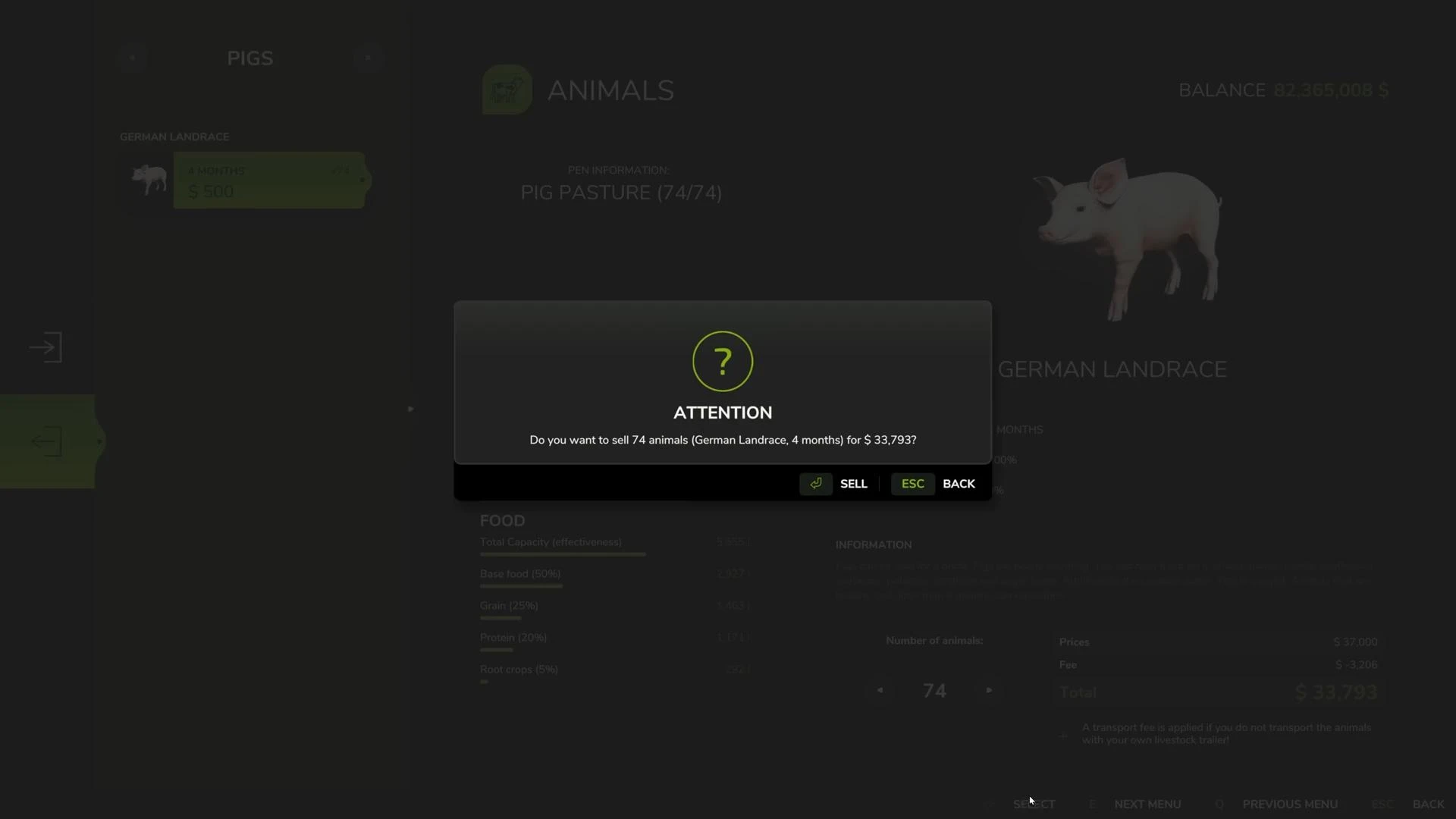
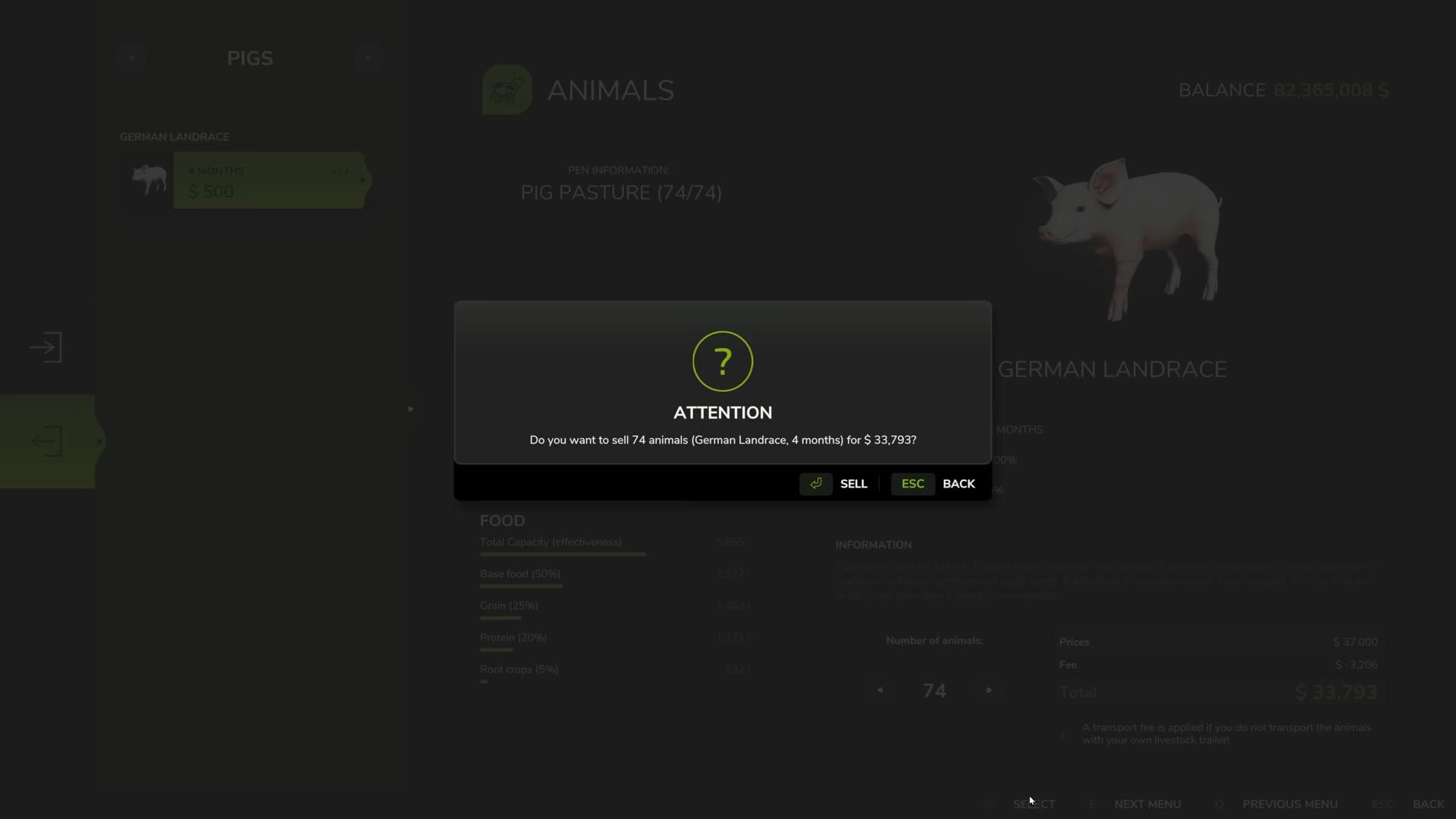
If you want to make money from pigs, the best option is to sell adult pigs. Once a pig reaches maturity and is no longer growing, it can be sold.
There are two options:
1. Selling from the pen directly. Simply walk up to the paw sign and sell through the menu. Minus: there is a shipping charge for the sale (NPC transportation).
2. Selling via trailer. Drive up with a trailer, load the animals and take them to the “Livestock Breeder” point. You sell them there - no commission. It's more profitable.
The maximum income comes from selling adult pigs, especially if you start with 0-month-old piglets. Selling fully grown offspring is the best cycle.
In addition, many players create fattening cycles where they partially fill the pen, give 100% feed, bring them to 6 months of age and sell them. Then it's all over again. This is a working model, especially on large farms.
Pigs are one of the most profitable animals in the game, but only if organized properly. If you're willing to put in a little work, pigs are worth it. And with the release of mods for mixing your own feed, their profitability will be even higher.
Videos


Hinzugefügt von