How to Harvest and Use Straw in Farming Simulator 25
-lg_modland.jpg)
In FS25 there are many useful crops that can bring good profits and be useful in farming. One of them is straw! It is one of the by-products of grain crops.
Straw can be used for animal bedding, sold or stored. But not all crops in the game leave behind straw. Let's find out how exactly to get it and what to do with it.
Sowing crops for straw
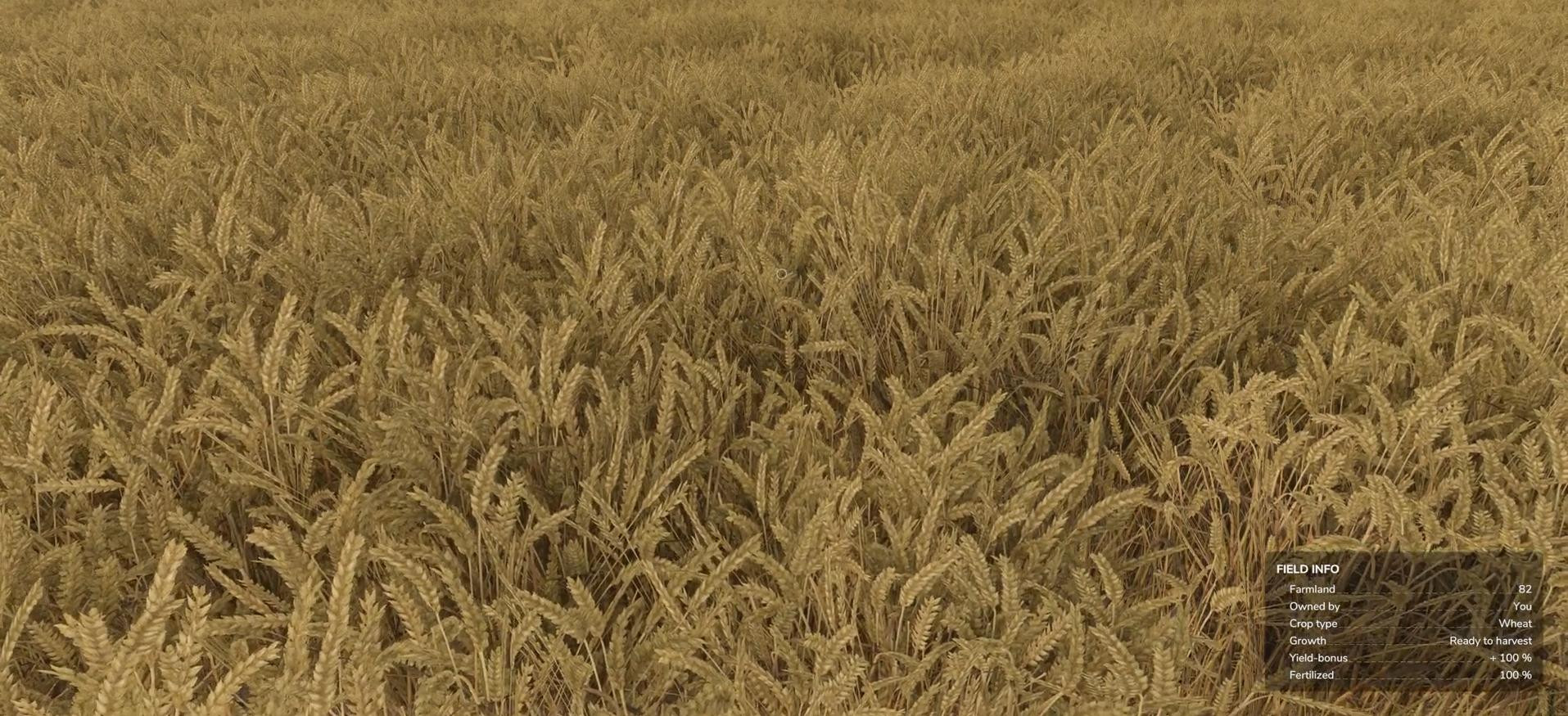
To start working with straw, you need to grow one of three suitable crops: wheat, barley or oats. Only these plants leave behind straw residue after harvesting!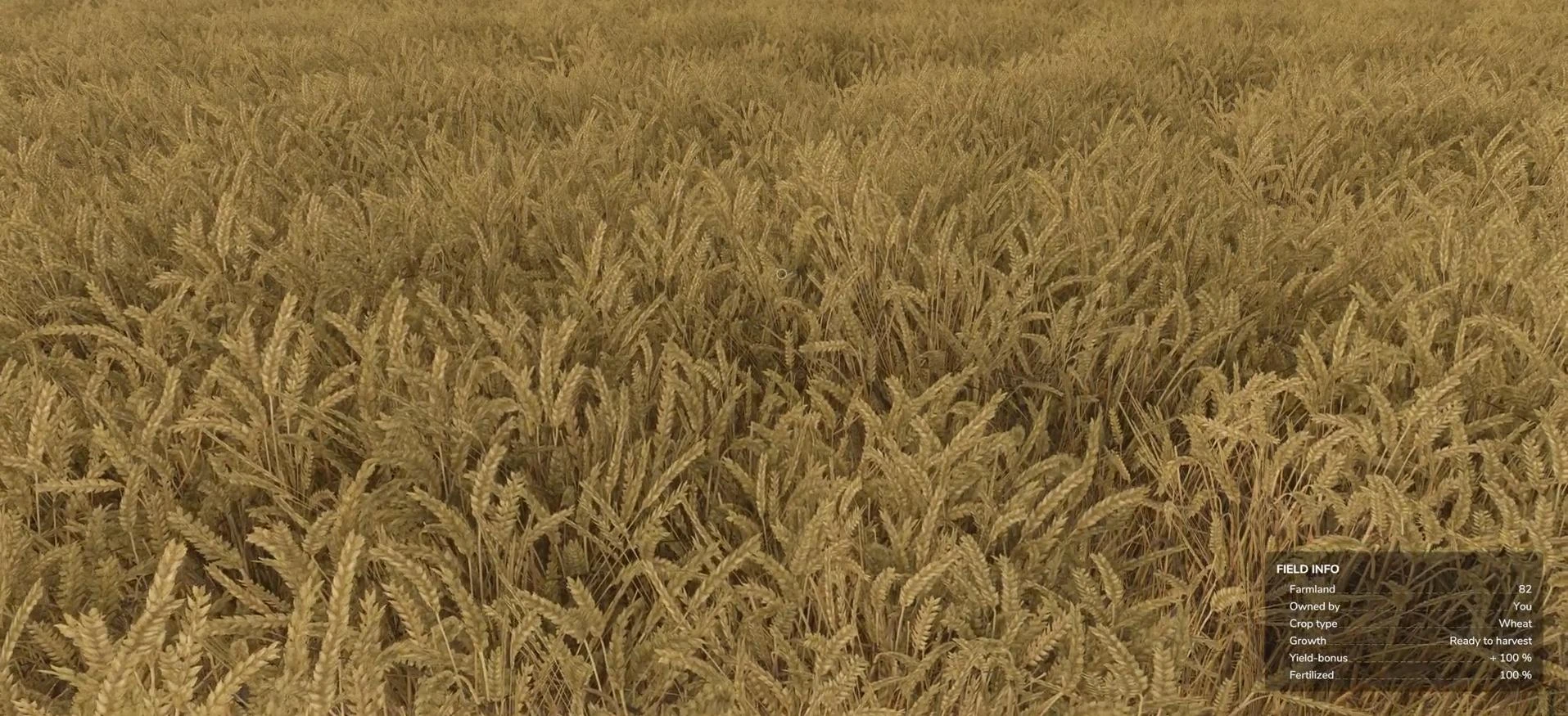
Once one of these crops is mature, buy a conventional combine harvester with the appropriate cutterbar.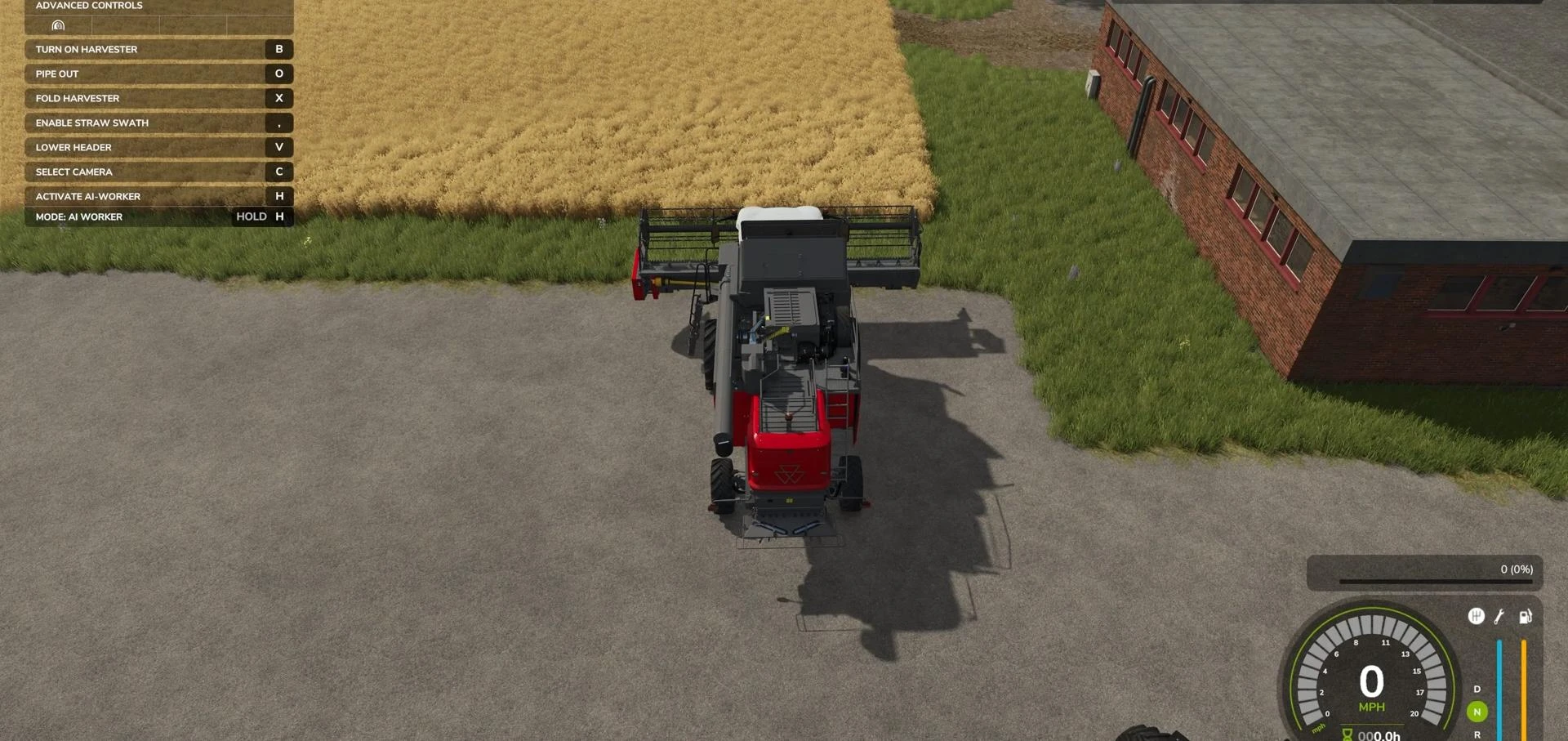
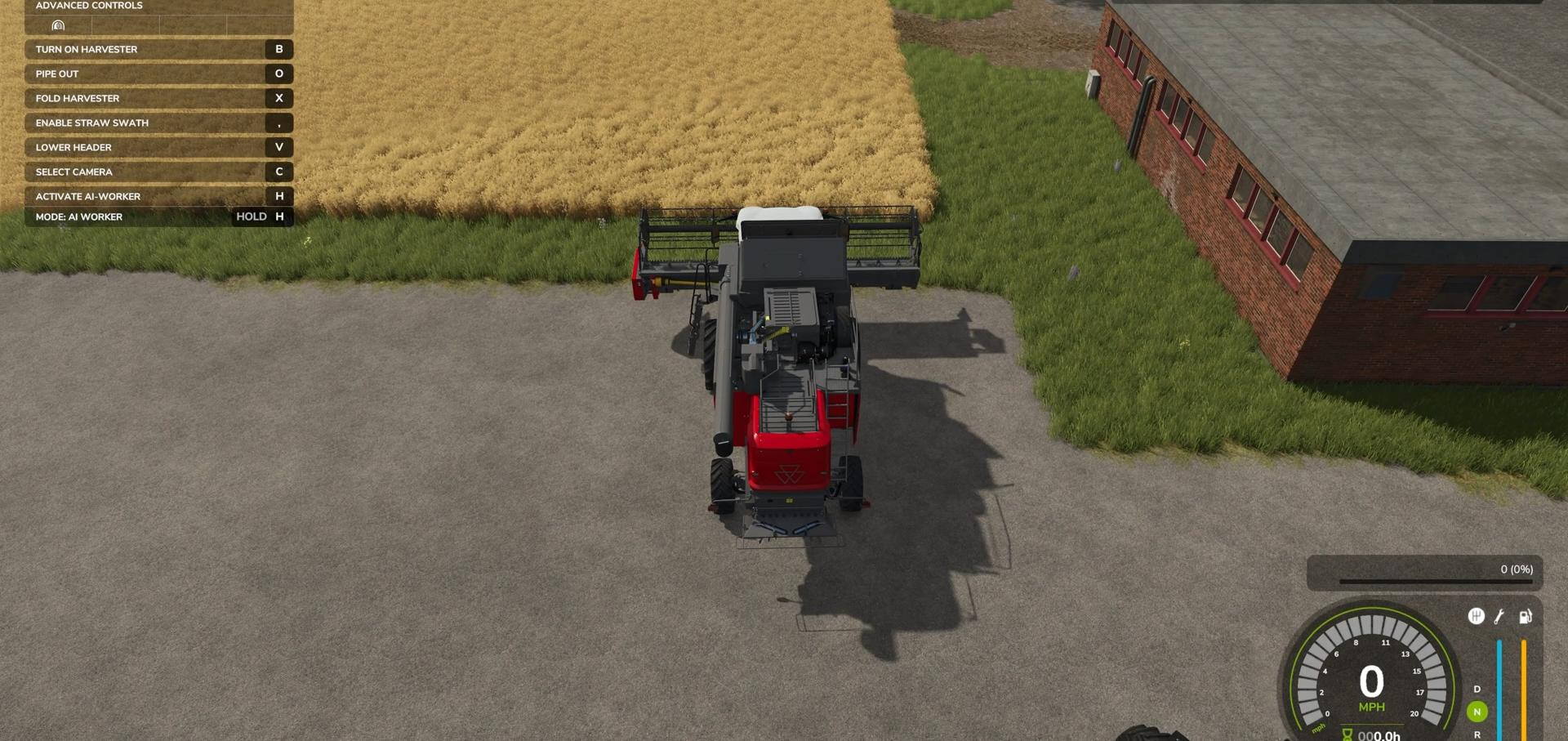
Connect the cutterbar and activate the straw ejection function. The straw ejection function will then be activated in the upper left corner of the screen. If you do not activate this function, the combine will simply shred the stalks and scatter them over the field. They will be unsuitable for straw!
It is important not to confuse straw with another type of residue - swath. This is formed when using swathing equipment, such as MacDon, and does not contain straw in its usual form. Swath and straw are different products and should not be used in the same way.
Preparing for harvesting
When the crops are ripe, the harvesting period begins. You can make do with any standard combine harvester equipped with a suitable grain harvester.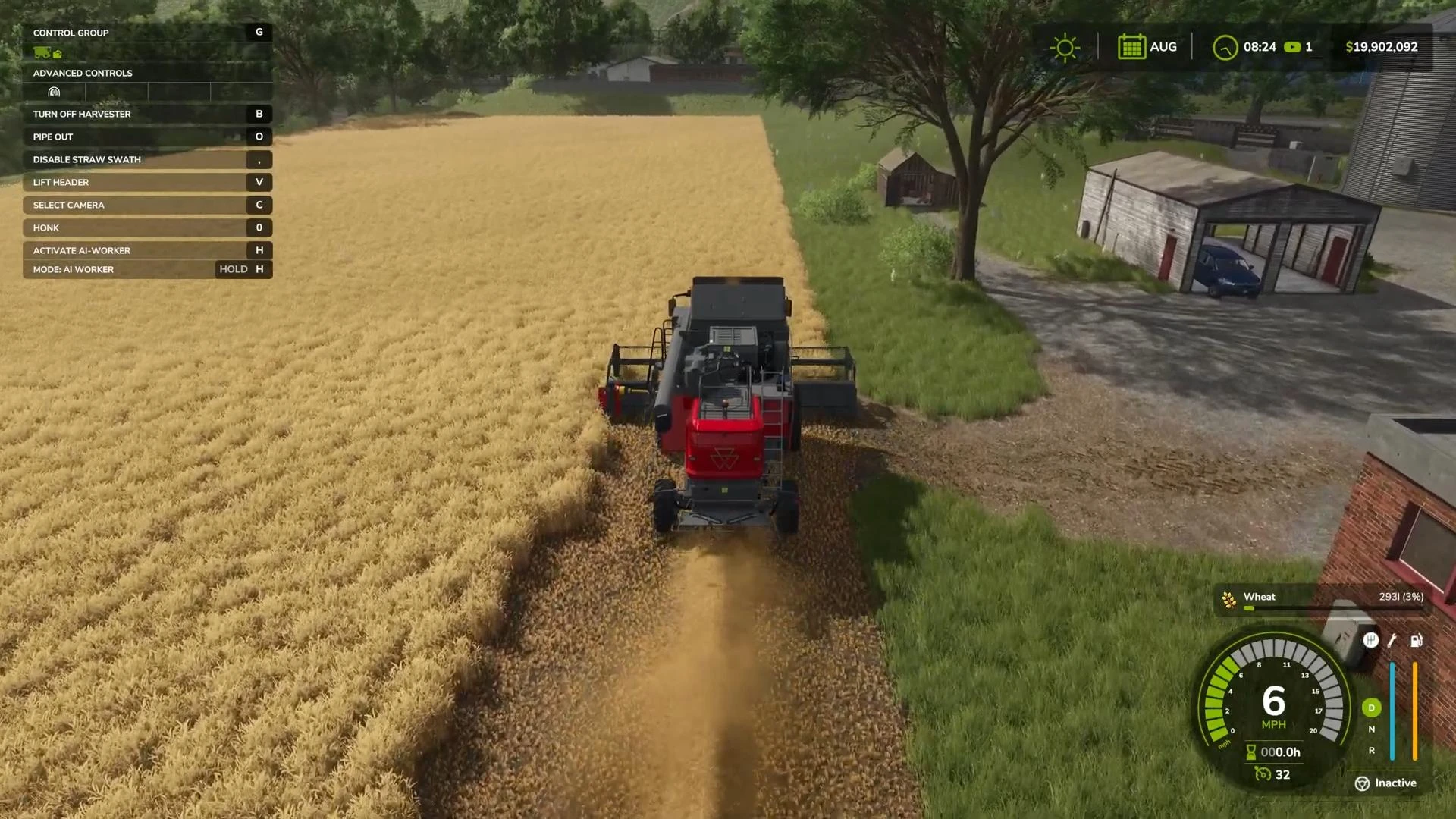
Be sure to activate the straw discharge function in advance. In the upper left corner of the screen you will see the option “enable straw spreading”, which must be activated. If you do not activate it, the combine will automatically chop and discard crop residues and you will not get straw.
Here are some recommendations that can be useful when harvesting straw in Farming Simulator 25:
- Use a powerful tractor to avoid overloading when working with forage wagons or balers.
- Work in a clear pattern, running the field in straight lines and avoiding erratic turns.
- Keep an eye on the capacity of your equipment - don't let it overflow to avoid wasting time on unscheduled unloading.
- Prepare bale trailers to speed up collection and avoid leaving bales in the field for long periods of time.
- Plan for dry weather to preserve straw quality and avoid straw spoilage.
- Decide in advance on the purpose of the straw - this determines how it is collected and where it is stored.
Straw is not the same as crop swath! The two types of residues are different. Crop swath does not contain the crop, it is exclusively the residue of the stalks after the grain has been harvested. Distinguish between these processes and choose the right mode depending on the task at hand.
Harvesting process with straw formation
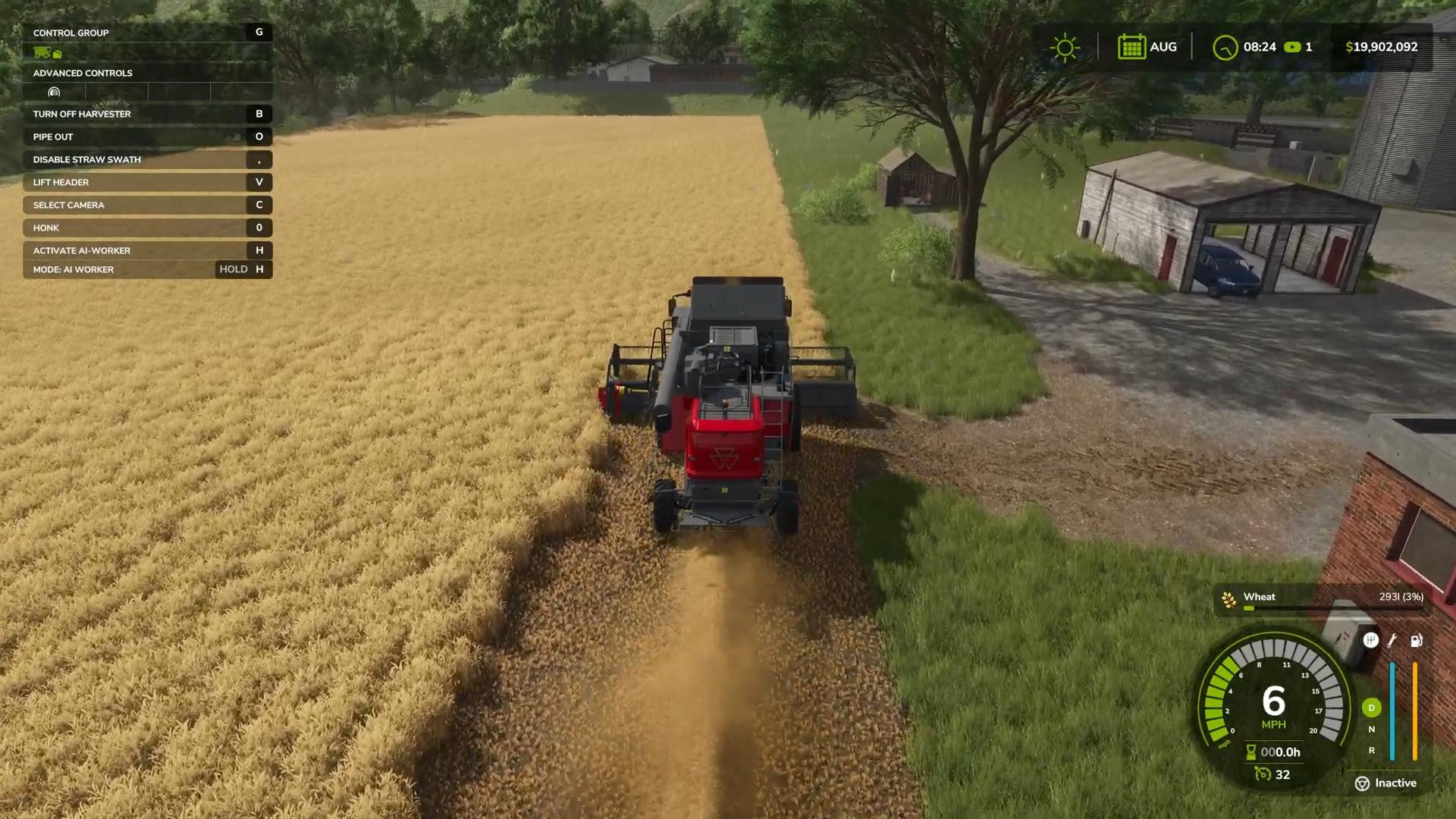
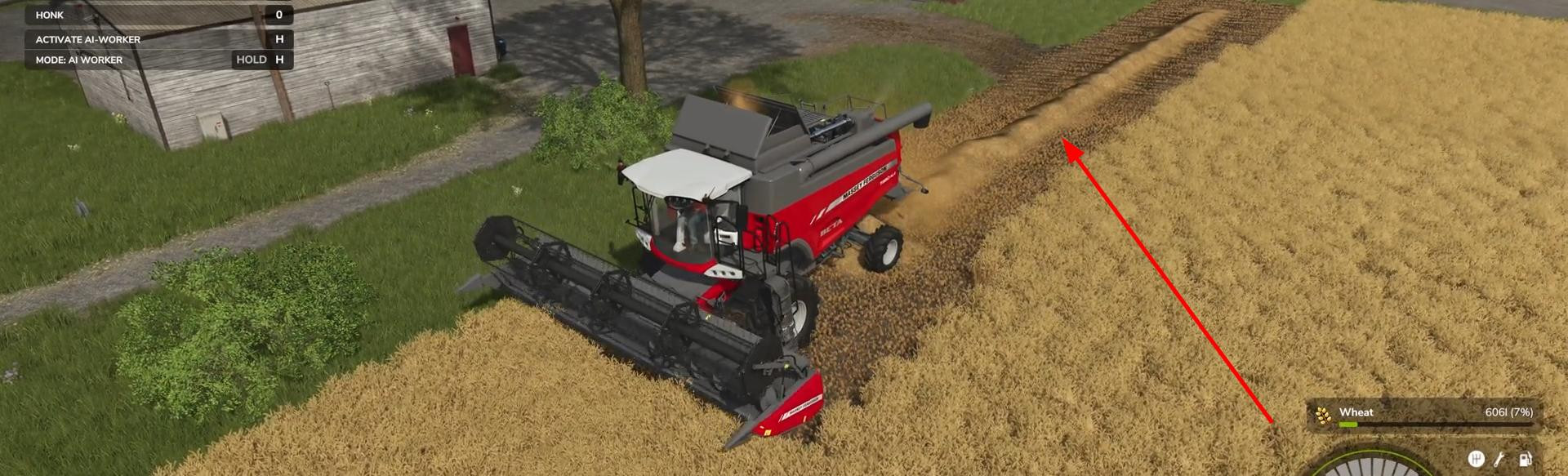
As the combine moves across the field, it cuts the cereals and separates the grain, leaving the straw mass as a long, flat strip behind. This trail is called a straw swath. This is what we will collect.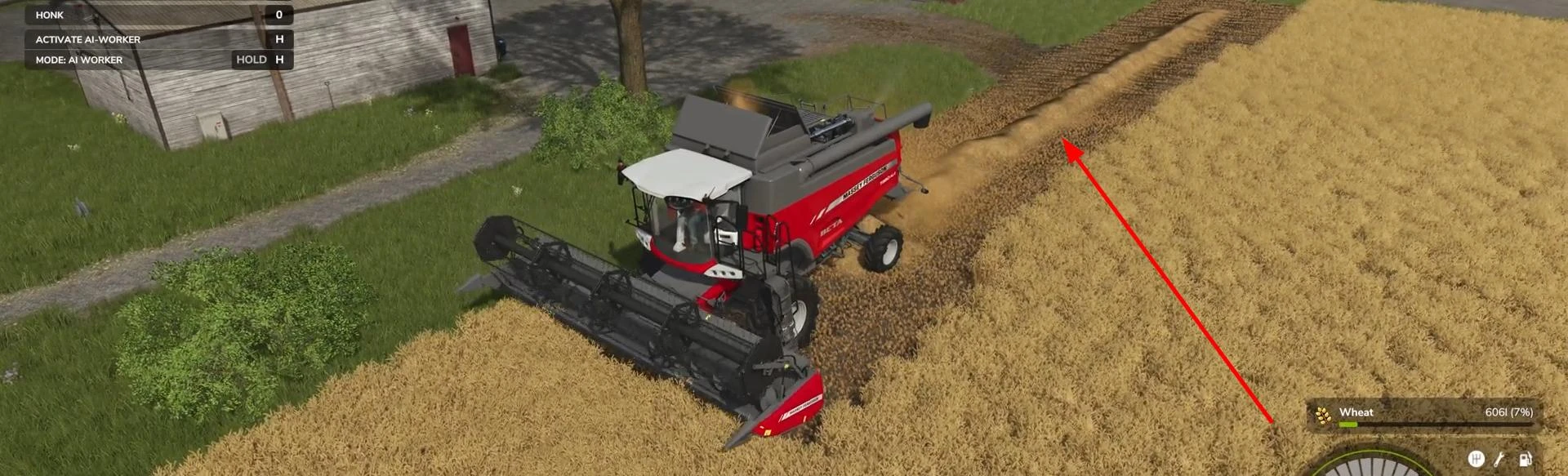
Do not turn off the straw function when collecting straw from the field, because you will lose some of the straw.
Visually, the straw swath is easily distinguishable - it has a light yellow color and runs evenly along the already harvested part of the field. If the swath does not appear, you should check whether the “switch on straw spreading” function is active and also make sure that the crop is indeed one of the three suitable crops.
The combine should run smoothly and consistently - too sharp turns or uneven movements can result in an intermittent swath.
After completing one pass through the field, you should stop and give the combine a little time to dump the residual straw. Sometimes this process can take a little longer. Do not cut the swath immediately to avoid stopping the discharge process. When you have finished with one swath, take your place on the other swath and continue collecting.
Methods of collecting straw from the field
Once the straw bale is fully formed, it needs to be collected. There are two main methods - using a forage wagon or a baler.
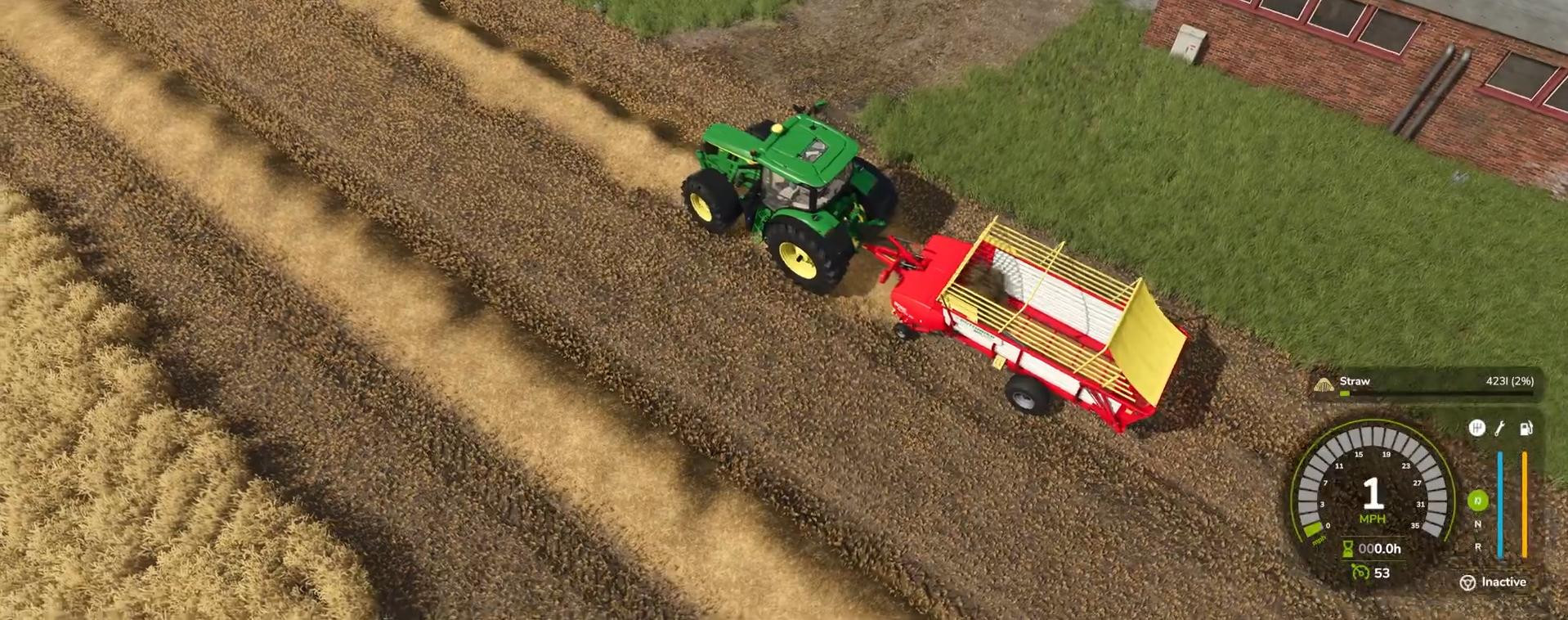
A forage wagon or pick-up is a trailer that collects the straw in loose form. It must be hitched to the tractor.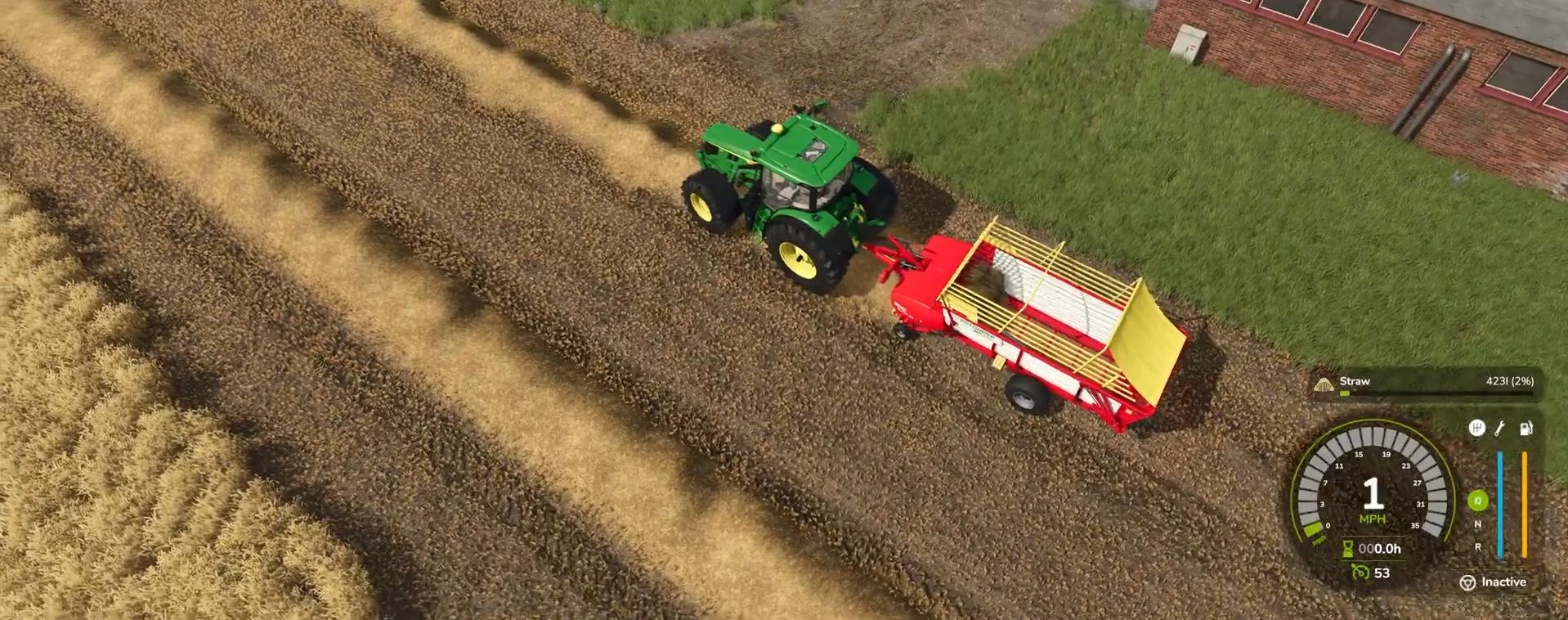
During collection, lower it to the ground and activate it by pressing the appropriate key (use the tooltip menu in the upper left corner of the screen). As it moves, the straw will be drawn in and accumulate in the hopper. If you plan to store straw in bulk or use it further in livestock farming or for sale as raw material, collect the straw in this way!
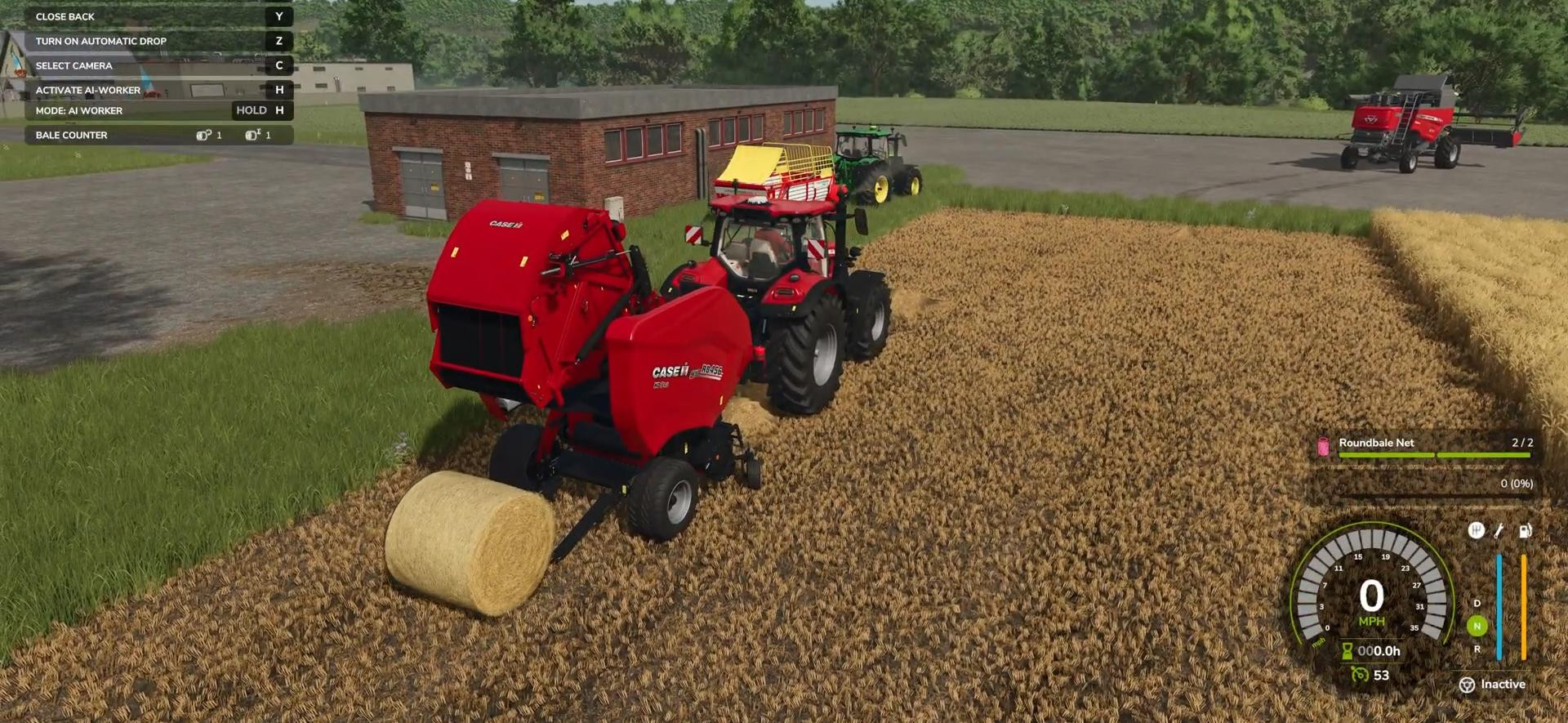
Straw can also be baled. This is done by specialized baling machines.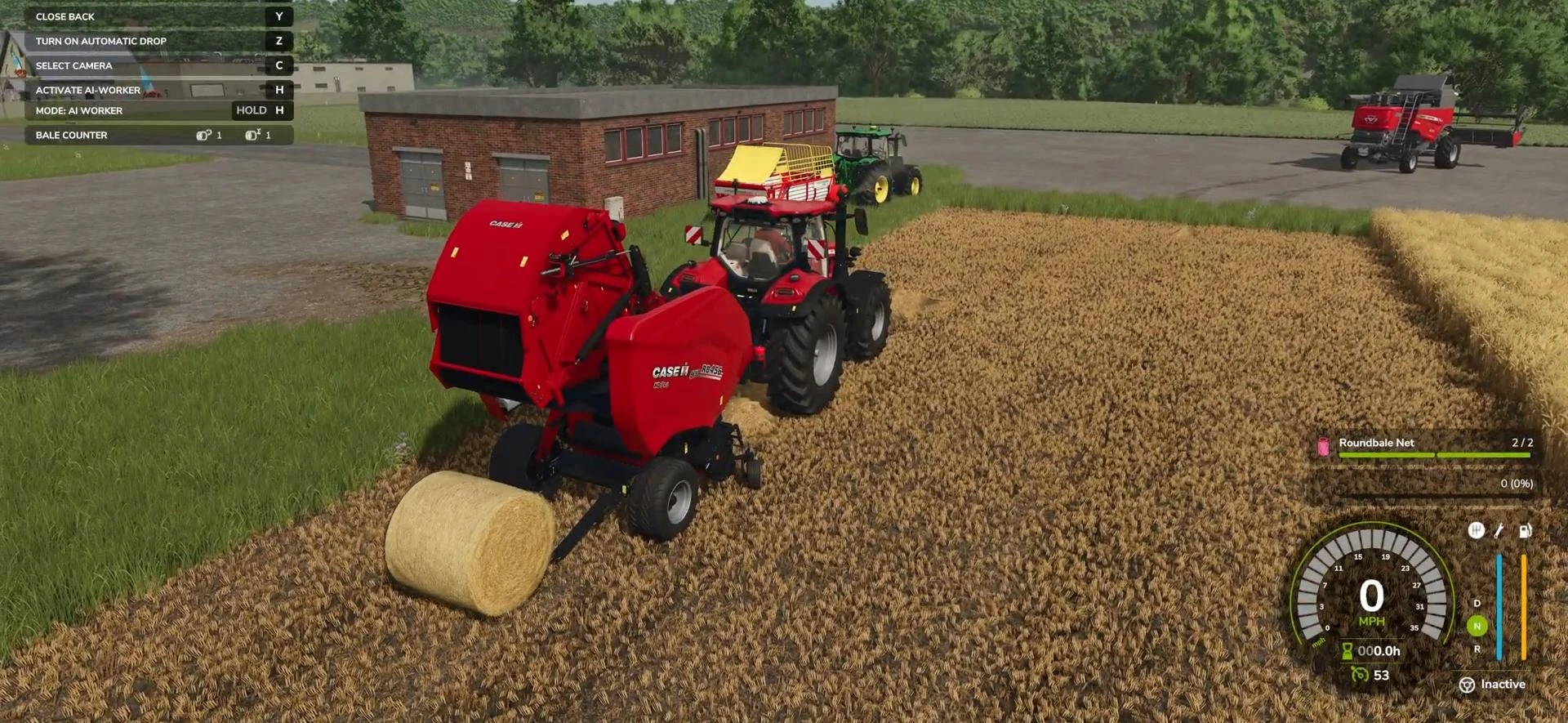
They can wrap the straw into round or square bales. The principle of operation is simple - the machine also drives along the swath, picks up the straw, forms it into a dense bale and throws it onto the field.
Square bales are formed quickly and without unnecessary worries. In the case of round bales, you will have to do a little bit of work, because they have to be dumped periodically, stopping the machinery from time to time to collect them. Square bale balers allow you to work without stopping, while round bale balers require periodic stops to dump the finished bales.
Storage and use of harvested straw
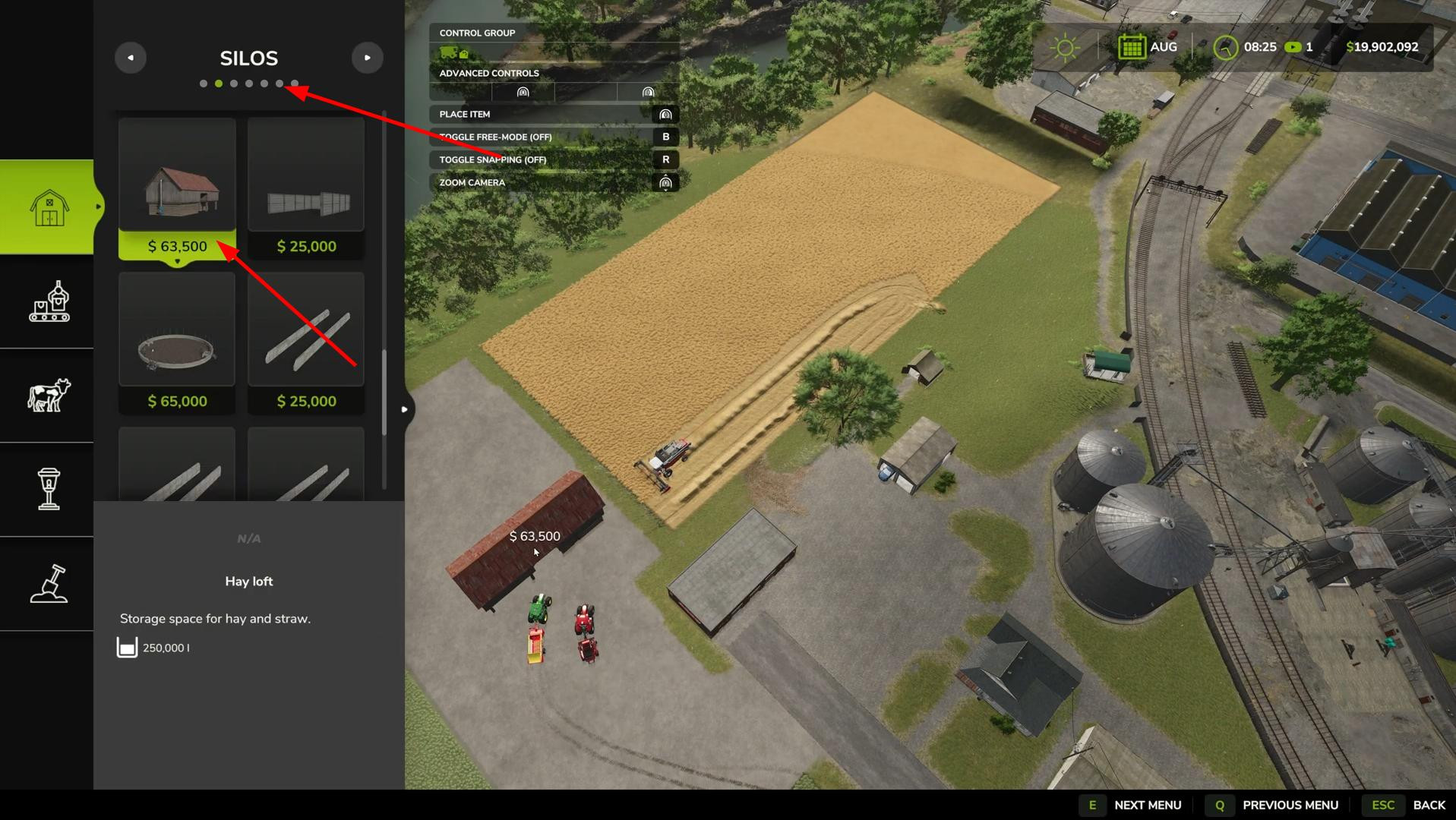
Straw or bales need to be stored somewhere. Therefore, take care of the storage in advance. You can buy it through the building menu, in the silos category There is a special storage called “Hay Loft”.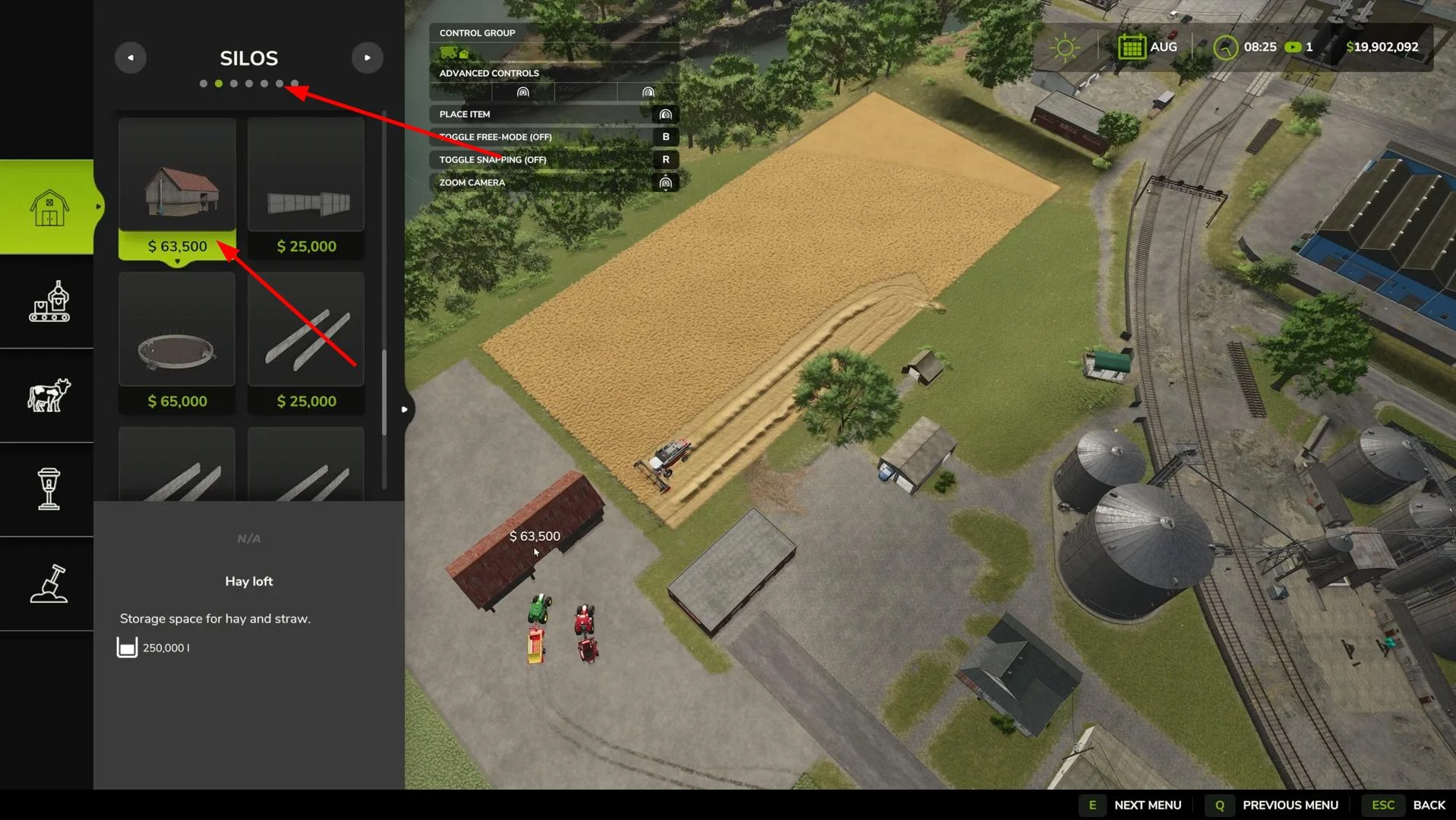
It accepts both loose straw collected by a forage wagon and bales formed by a baler. This loft is specifically designed for straw and hay, it cannot be used for grass!
Any vehicle with a spacious trailer will be suitable for moving bales from the field. You may also need a forklift to load the bales onto the trailer. You can buy all this equipment at the store.
Where can straw be used?
Straw can be used for a variety of purposes on the farm. It is used as bedding in animal pens, to make manure, as a component for feed production, and as a commodity for sale.
In some cases it is processed into compost or used in modifications with biogas plants.
Straw can be sold at retail outlets that accept this material. It can also be sold through production buildings that use straw (e.g. biomass power plants, if available on the map or by modification).
Videos


Hinzugefügt von