Biogas Plants (BGA) in FS25: Detailed Guide
 (1)-lg_modland.jpg)
-lg_modland.jpg)
-lg_modland.jpg)
-lg_modland.jpg)
Biogas plants (BGA) in Farming Simulator 25 are used to process organic materials to generate income and produce fertilizers that can improve crop yields. These facilities turn waste into profit.
But it's important to understand how they work and what you'll need for production.
What are BGA's in FS25 and why are they needed?
-lg_modland.webp)
Biogas plants are large production facilities that can process both silage, manure, sugar beet cake and liquid manure (slurry). The processing process produces three types of resources: methane, electricity and digestate.
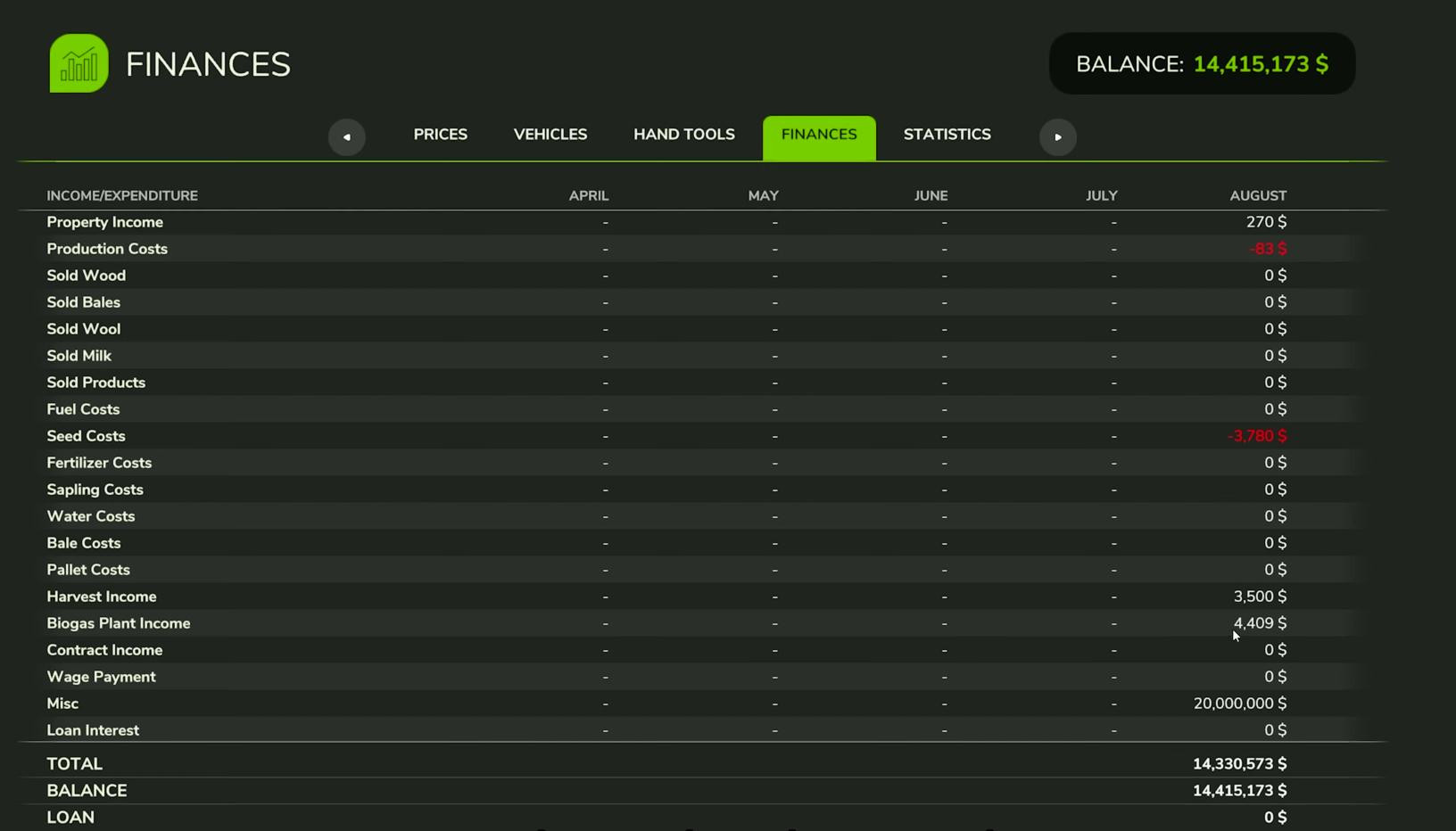
Methane and electricity are automatically sold on the market and can provide a stable income, while digestate is used to fertilize fields. Therefore, BGAs can be seen not only as profitable production facilities but also as a way to obtain field fertilizers at a more affordable price.
The history of biogas plants in the Farming Simulator series began in earlier versions of the game. They became popular as early as Farming Simulator 17 due to their simplicity and high profitability. In version 25, the mechanics of BGAs remain similar, but new elements have been added.
Types of Biogas Plants
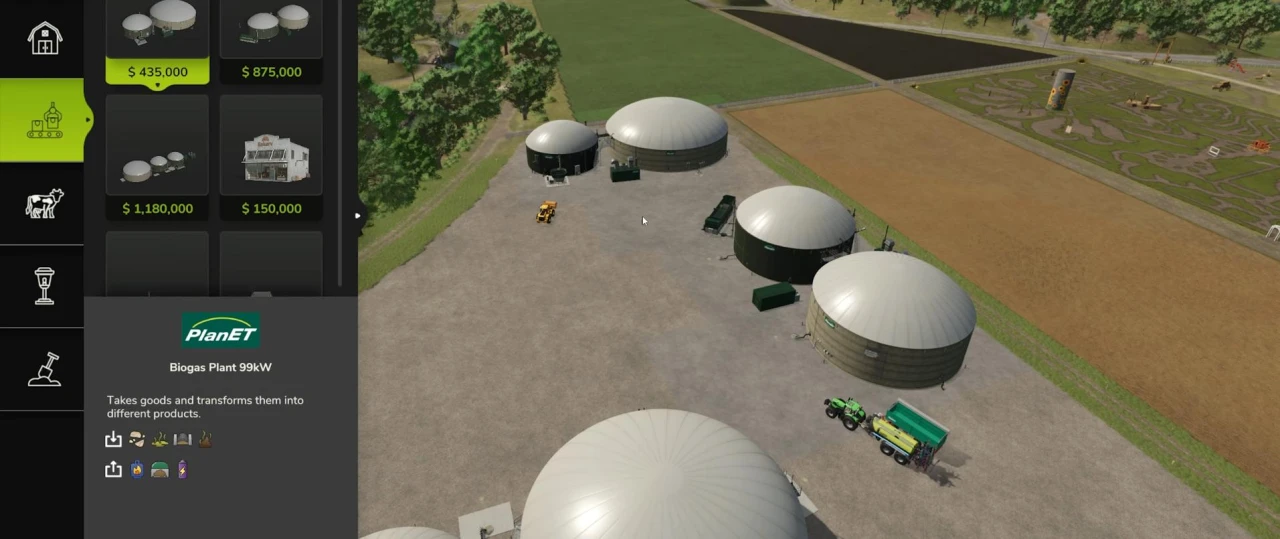
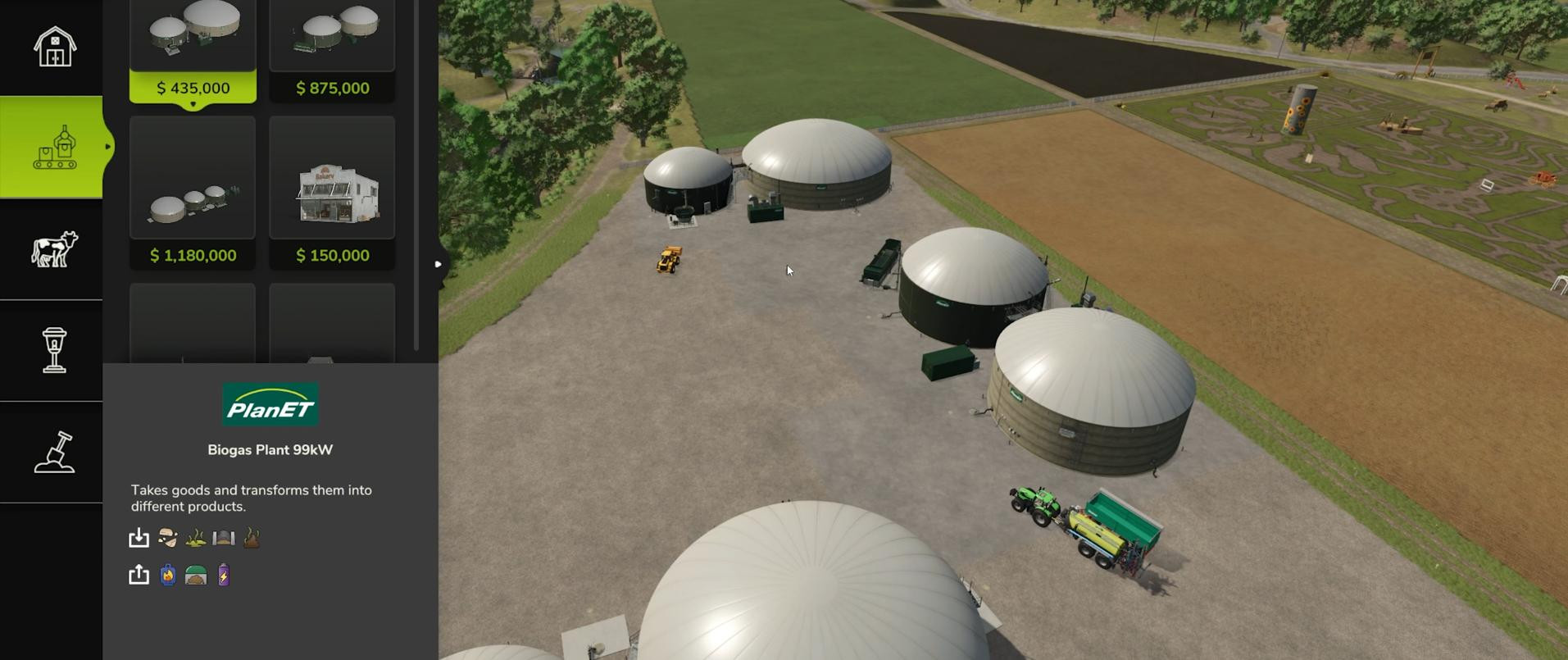
The game features four main types of BGAs, differing in scale, cost, and productivity.
The first and most affordable plant is the 99-kilowatt BGA. It costs about 435,000 dollars and is suitable for small farms. It does not boast high efficiency, however, it can be used for fertilizer in the initial stages.
Next is the 250-kilowatt plant for $875,000. It offers higher processing speed and produces more methane and electricity than the previous version.
The 500-kilowatt plant is a serious choice for medium and large farms. This facility costs $1,180,000 but has significantly higher productivity.
Finally, the most powerful option is the 1-megawatt biogas plant, which is located on the base maps of the game. This facility processes resources faster than all others, produces the most methane, and yields the highest profit. It cannot be purchased directly but is available on the Riverbend Springs, Hutan Panai, and Zonka maps.
How Do Biogas Plants Work?
-lg_modland.webp)
Biogas plants accept specific resources such as silage, sugar beet pulp, manure, and slurry.
These materials are processed over time and yield three outputs:
-
Methane, the primary source of income, is automatically sold.
-
Electricity is also sold on the market, though in smaller amounts than methane.
-
Digestate. It is used as an organic fertilizer.
For example, if you load 1,000 liters of sugar beet pulp, you get 900 liters of digestate, a certain amount of methane and electricity. Depending on the plant’s capacity, the volume of processing and resource output will vary.
Silage is considered the most profitable resource for processing. It processes faster than other materials and generates more profit. Slurry and manure process more slowly but are excellent supplementary resources, especially if you have a large number of animals.
Economic Efficiency
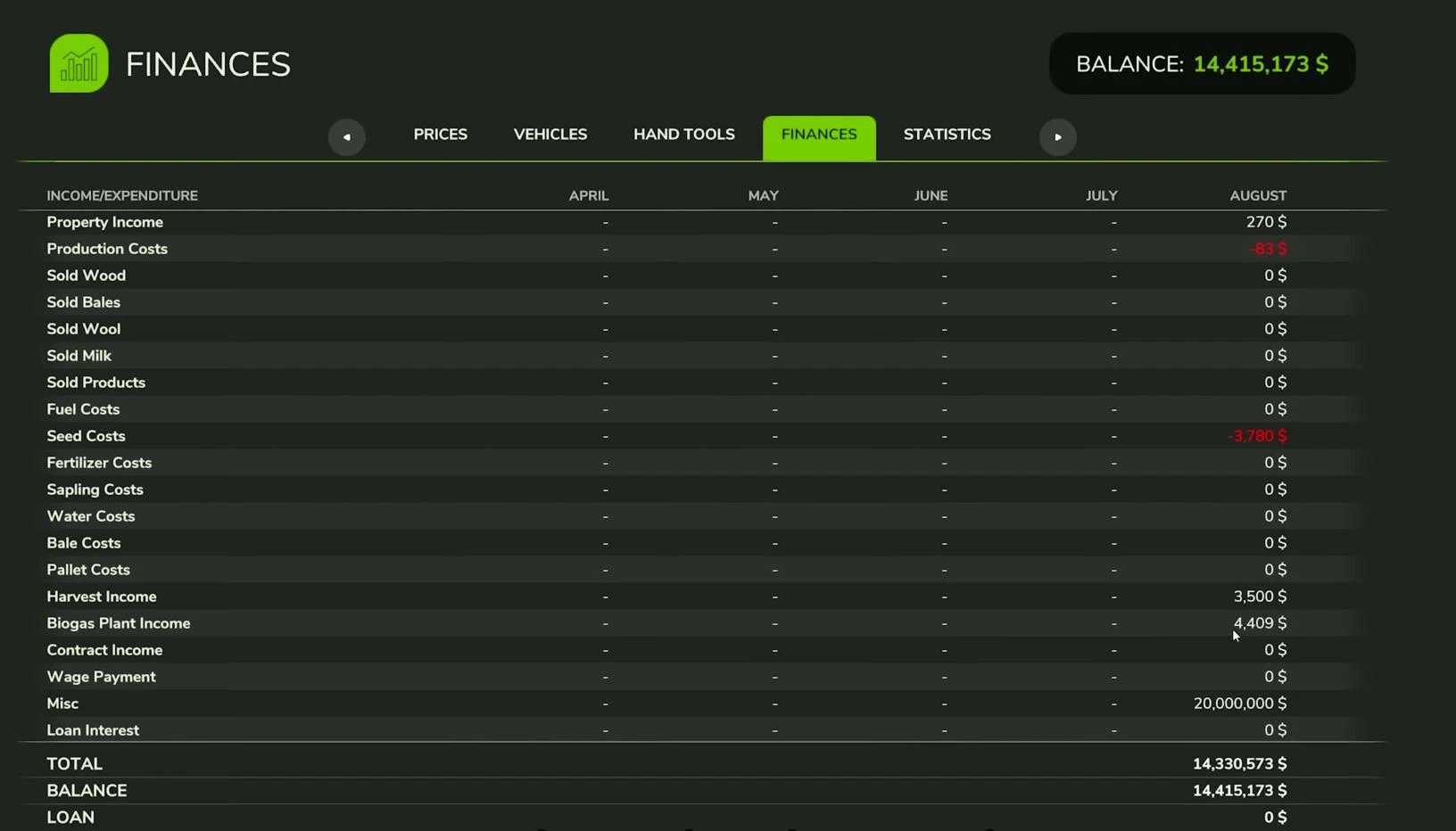
Biogas plants allow you to not only process waste but also earn money from it. Income depends on the type of plant and the volume of resources processed. For example, for 1,000 liters of sugar beet pulp, you’ll earn about $640 at a 99-kilowatt plant, while a 1-megawatt plant will generate over $800.
The main difference between plants is the processing volume. High-capacity plants, such as the 500-kilowatt and 1-megawatt options, process more resources per cycle and produce more methane.
How to Use Biogas Plants Effectively?
To maximize the efficiency of BGAs, optimize silage production. This resource processes the fastest and generates the most profit.
You can produce silage from corn or grass and then load it into the BGA. Use digestate as fertilizer, as it has the same properties as manure or slurry but is produced in larger quantities. Each plant has processing limits, so plan your resource loads accordingly.
If you notice that your plant can’t handle the volume of resources, consider upgrading to a more powerful BGA.
Resource Loading
-lg_modland.webp)
All biogas plants have separate sections for resource loading. Silage and sugar beet pulp are loaded into the main intake located at the top. Manure is unloaded into a special side compartment, and slurry is supplied through a separate tank. After loading, the resources are automatically processed, and the finished products (methane, electricity, and digestate) are distributed according to the plant’s settings.
Biogas plants turn farm waste into valuable products. If your goal is to increase income or reduce fertilizer costs, you should consider using these facilities. Try them and see for yourself!
Videos

Added by