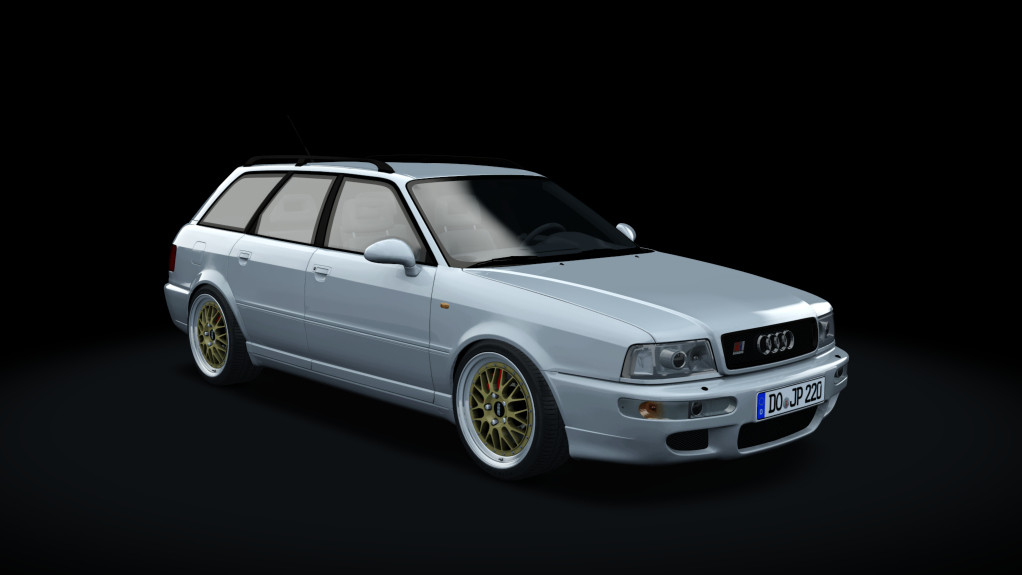
Audi RS2 Avant JP Performance 1993 1.0
0/5,
0
votes
Power/Torque Curve
The Audi RS2 Avant was a limited edition, high- performance Audi five- door, five- seat estate vehicle (station wagon) created in collaboration by Audi AG and Porsche and based on Audi's 80 Avant platform. It was Audi's first "RS" car and the first of their high- performance Avants; it was powered by the most powerful and extensively modified version of Audi's inline- five cylinder turbocharged internal combustion engine.
The "RS" letters stand for RennSport (from German, roughly translated as "racing sport"), and it is Audi's highest performance 'top- tier' trim level, set apart from the "S" ("Sport") specification level of Audi's normal model line. RS automobiles are often manufactured in small quantities over a short period of time and represent some of Audi's most sophisticated technology and technical skills; hence, "RS" cars may be classified as halo cars. While RS automobiles often attract a significantly higher initial price than their 'lesser' counterparts, they also maintain extremely high residual values.
It was powered by a modified version of their 2.2 litre inline five- cylinder 20- valve turbocharged petrol engine, with a motive power output of 232 kilowatts (315 PS; 311 bhp) at 6,500 rpm.
Porsche significantly modified the engine, replacing the standard KKK turbocharger with a larger unit, as well as a heavy- duty intercooler and higher flow fuel injectors, a newly designed camshaft, a more efficient induction system, and a low- pressure exhaust system; the engine was controlled by a specially modified URS4/URS6 Bosch engine management system (ECU).
With so much power available, the RS2 could accelerate from 0 to 100 km/h (62.1 mph) in less than 5 seconds and reach a maximum speed of 262 km/h (162.8 mph) (electronically limited), while weighing over 1,600 kilograms (3,527 lb). In a 1995 road test, British automotive magazine Autocar timed the RS2 from 0 to 30 mph (48 km/h) in 1.5 seconds, confirming that it was quicker than both the McLaren F1 road car and Jacques Villeneuve's Formula One car at the time. Even by current standards, its performance is excellent, with acceleration comparable to the C5 generation Chevrolet Corvette and the 996 generation Porsche 911. The maximum speed was 166 mph.
A six- speed manual transmission was the sole option. Audi's Torsen- based 'trademark' quattro permanent four- wheel drive system came standard. The front and rear final drive units used a typical 'open' differential with a ratio of 4.111, albeit the rear additionally included an electro- mechanical diff lock.
The main flaw of this automobile was a greater amount of roll and body movements compared to comparable cars like as the M3. People undoubtedly anticipated greater race- like performance from the RS2, thus they criticized it for the poor steering reaction, which was caused indirectly by the roll motion and the hefty nose. The RS2, on the other hand, established an entirely new sector and hence lacked a serious competition.
Credits:
LXZ
The "RS" letters stand for RennSport (from German, roughly translated as "racing sport"), and it is Audi's highest performance 'top- tier' trim level, set apart from the "S" ("Sport") specification level of Audi's normal model line. RS automobiles are often manufactured in small quantities over a short period of time and represent some of Audi's most sophisticated technology and technical skills; hence, "RS" cars may be classified as halo cars. While RS automobiles often attract a significantly higher initial price than their 'lesser' counterparts, they also maintain extremely high residual values.
It was powered by a modified version of their 2.2 litre inline five- cylinder 20- valve turbocharged petrol engine, with a motive power output of 232 kilowatts (315 PS; 311 bhp) at 6,500 rpm.
Porsche significantly modified the engine, replacing the standard KKK turbocharger with a larger unit, as well as a heavy- duty intercooler and higher flow fuel injectors, a newly designed camshaft, a more efficient induction system, and a low- pressure exhaust system; the engine was controlled by a specially modified URS4/URS6 Bosch engine management system (ECU).
With so much power available, the RS2 could accelerate from 0 to 100 km/h (62.1 mph) in less than 5 seconds and reach a maximum speed of 262 km/h (162.8 mph) (electronically limited), while weighing over 1,600 kilograms (3,527 lb). In a 1995 road test, British automotive magazine Autocar timed the RS2 from 0 to 30 mph (48 km/h) in 1.5 seconds, confirming that it was quicker than both the McLaren F1 road car and Jacques Villeneuve's Formula One car at the time. Even by current standards, its performance is excellent, with acceleration comparable to the C5 generation Chevrolet Corvette and the 996 generation Porsche 911. The maximum speed was 166 mph.
A six- speed manual transmission was the sole option. Audi's Torsen- based 'trademark' quattro permanent four- wheel drive system came standard. The front and rear final drive units used a typical 'open' differential with a ratio of 4.111, albeit the rear additionally included an electro- mechanical diff lock.
The main flaw of this automobile was a greater amount of roll and body movements compared to comparable cars like as the M3. People undoubtedly anticipated greater race- like performance from the RS2, thus they criticized it for the poor steering reaction, which was caused indirectly by the roll motion and the hefty nose. The RS2, on the other hand, established an entirely new sector and hence lacked a serious competition.
Credits:
LXZ
Direct Download Links
Version: 1.0Updated: 5 months ago
Total Size: 37.2 MB audi-rs2-avant-jp-performance-1993_modland.7z direct download · 37.2 MB · added 5 months ago
Specifications
| Power | 315 hp |
| Torque | 410 Nm |
| Weight | 1595 kg |
| Top Speed | 260 km/h |
| Acceleration | 0 - 100 kph in 5.0 s |
| Power Ratio | 5.06 kg/cv |
About Mod
| Latest Version | 1.0 |
| Game | Assetto Corsa |
| Category | Cars |
| Tags | Audi |
| Downloads | 357 |
| Created | 5 months ago |
You Might Also Like »


_modland.webp)


0 Comments
There are no comments. Be first to comment!